
A lot of County landowners are sitting on more potential than they realize. You have the acreage, or the big lot in town, or the old drive shed you have been meaning to do something with, and lately the rules around adding a second home on your own property have loosened in a real way. An additional dwelling unit, an ADU, is the second roof: a garden suite for aging parents, a rental that helps carry the mortgage, or a place for an adult kid who cannot afford to buy near family. Almost everything written online about ADUs is generic Ontario advice or aimed at Toronto backyards. This is the Prince Edward County version, written for the way land, water, and septic actually work here.
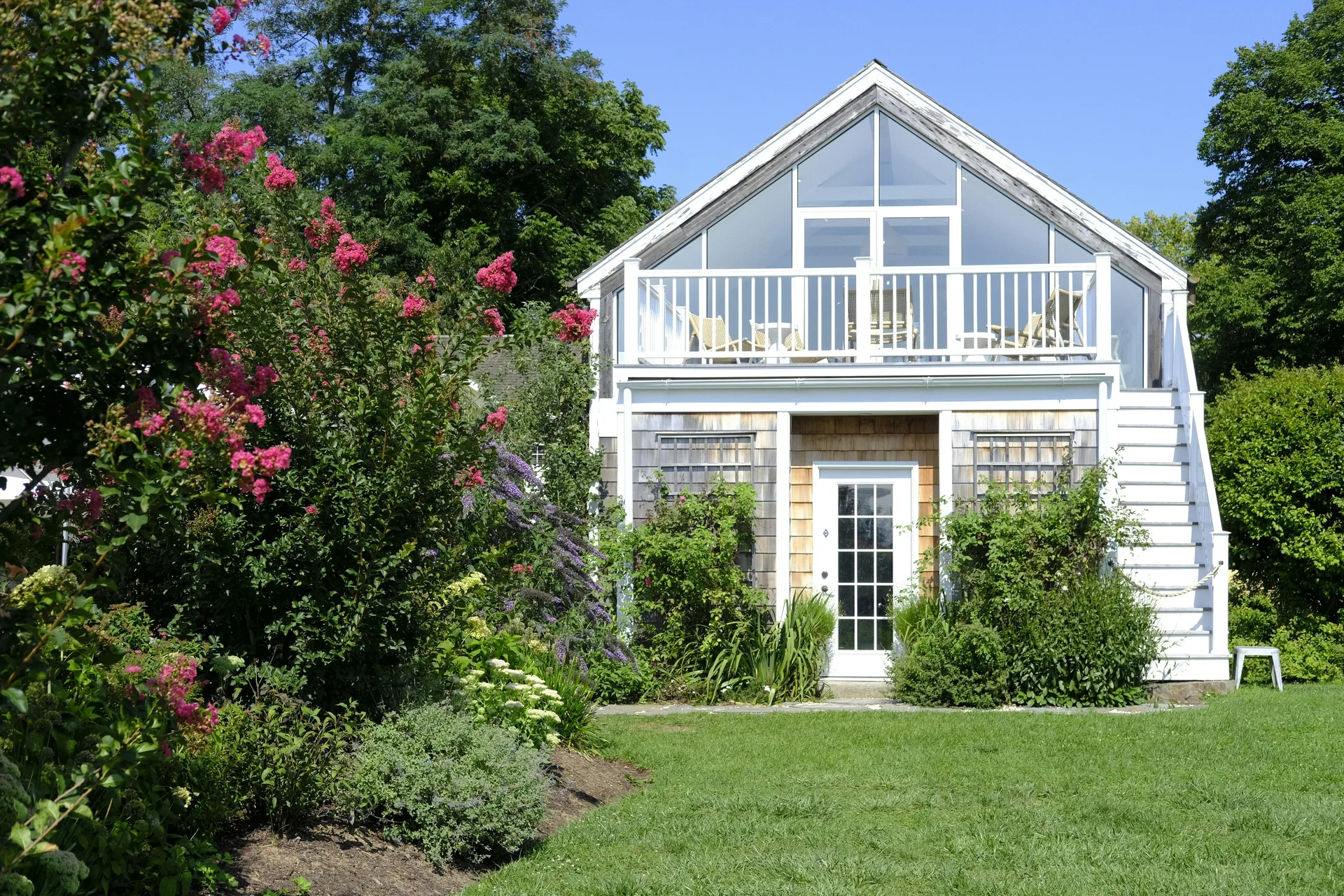
A second, smaller roof on the same property. On a lot like this, the question is no longer whether a unit like it is allowed, it is whether the land can service it.
What the Province Just Changed, and What It Means for You
The big shift came from Ontario's Bill 23, the More Homes Built Faster Act, which pushed municipalities to permit additional units on most residential lots as-of-right. The County has now written that into its own rules with the Comprehensive Zoning By-law 140-2025, adopted by County Council on November 10, 2025. That is the current, adopted by-law, not a proposal, and it is the authority that actually governs what you can build here.
Under Section 3.2 of that by-law, a lot with a single-detached, semi-detached, or townhouse dwelling can have up to two additional dwelling units, for a maximum of three total units on the lot. As-of-right is the phrase that matters: on a qualifying lot you are not fighting for a rezoning or a minor variance to get there.
How those two additional units can be arranged is spelled out. Either both additional units go inside the principal dwelling (provided no detached building also contains one), or just one of them can go in an ancillary building, a detached structure such as a coach house or garage suite. You cannot put two units in the main house and a third in a detached building.
Two things do not go away. The as-of-right permission removes the zoning battle, but you still need a building permit before you establish the unit, and you still have to prove the property can service the added occupancy. In most of the County that second point is the whole ballgame, and I come back to it in section three.
Rural and Agricultural Zoning: the Details That Matter
The two-units maximum applies across residential lot types, but the zoning label on your property drives the specifics of where a detached unit can go and how big it can be. Both an Additional Dwelling Unit and a Garden Suite are listed as permitted accessory uses in the Agricultural (AG) and Rural (RU) zones under By-law 140-2025, so on rural and farm land, including vacant land you're considering building on, you have real room to work with, subject to the general provisions in Section 3.
The size cap. An ADU cannot exceed 50% of the gross floor area of the principal dwelling. The one exception is a basement unit: a basement ADU can occupy the whole basement if the finished storey sits above the sewer level, or the unit is served by a sewage pumping facility. An ADU also is not exempt from the zone's maximum lot coverage, so the footprint still counts against your overall limits.
Detached units in AG and RU. Here is a detail people get wrong. An ADU in an ancillary building on AG or RU land has to sit within 60 metres of an existing building or structure on the lot, you cannot drop it in a far corner of the acreage. But the trade-off is generous: notwithstanding the usual height limits for accessory buildings, that detached unit can be built up to the maximum height allowed for a principal dwelling in the zone, which is 10 metres in AG and RU. That is a lot more than most people assume they can do with a garage-apartment type structure.
The practical layout rules. The principal dwelling and the additional units have to share the same parking area and yards, no new driveway can be created for the ADU (access is via the existing driveway), and you cannot add a new front-wall entrance to the principal dwelling for the unit, with narrow exceptions for some corner lots and existing multi-entrance homes. ADUs are also not permitted in a group home, boarding house, or rooming house, and are not permitted in a regulated floodplain, even if the existing dwelling is a legal non-complying structure there.
It is worth knowing the difference between the two kinds of detached unit. A Garden Suite is defined as an accessory dwelling that is temporary or portable and does not include a basement or crawlspace, so it sits on a slab or piers, and it has its own separate provisions. A permanent detached ADU is a fully built structure on a foundation. Both count toward your total, but they are treated very differently, and which one you want changes your permit path and your cost.
One thing none of the above covers: converting an existing barn or other accessory structure into living, commercial, or event space is a separate and stricter path under the same by-law, generally a rezoning or minor variance rather than an as-of-right permission. If that is what you have in mind, start with what a barn actually means for your purchase, because the insurance and structural questions come before the planning ones.
The Well and Septic Catch Nobody Mentions
This is the section outside content will never write, because outside content assumes municipal water and sewer. Most of Prince Edward County is not on municipal services. It is on private wells and septic systems (see my full guide to well and septic questions in PEC for the basics), and Section 3.2.3 of By-law 140-2025 makes servicing a condition of any ADU: a unit is only permitted where adequate public or private water and sanitary services are available.
On a full municipal-services lot, it is straightforward. There is only one municipal water meter per lot, so the ADU connects to the principal dwelling's water supply after the meter, and to the same building drain.
On private or partial services, which is most of rural PEC, the by-law is more specific than the generic advice you will find online. Two separate triggers matter, and they are not the same thing:
The Servicing Report (the definite one). A Servicing Report, to the satisfaction of the County's Director of Development Services, is required for any ADU on a lot smaller than 1.25 hectares, about three acres, regardless of zone. This is the mandatory one, and because AG and RU parcels are usually far larger than 1.25 hectares, it lands mostly on smaller settlement and hamlet-area lots rather than big rural acreages.
The Hydrogeology Report (the discretionary one). On private-services land, a detached ADU or an ADU in an ancillary building is permitted where sufficient private water and wastewater capacity can be demonstrated, and is subject to a Hydrogeology Report to the satisfaction of the Director of Development Services as required. "As required" is the operative phrase: this is a case-by-case call at the Director's discretion, not something automatically triggered on every application. If you own a large well-and-septic acreage, this is the report you should actually expect to face, rather than the small-lot Servicing Report.
What It Actually Costs (and the Development Charge Break)
There is genuinely good news on the money side. Bill 23 eliminated development charges for qualifying additional residential units, including garden suites, across the province. Depending on the project and the municipality, that is roughly ten to thirty thousand dollars that used to land on a project like this and no longer does. It is one of the larger fixed costs, gone, and it shortens the payback period on a rental unit considerably.
What you are still on the hook for, no matter which unit type you choose:
The building permit and Ontario Building Code compliance. Every unit has to meet the Building Code, including proper fire separation between units and safe egress from sleeping areas. You pull a permit before construction starts, not after.
The build itself. A garden suite on a slab is a different budget than a permanent unit on a full foundation, which is different again from finishing a basement suite inside the existing house. Know which you are pricing before you compare quotes.
Servicing. This is the County-specific line. If your well or septic needs work to carry the new unit, that cost belongs in your budget from day one, not as a surprise at the end.
What It's Actually Worth: Rental Income and Housing Family
Let me be direct about what an ADU is worth here, and what it is not. It is not a back door into short-term rental income. The County froze new secondary residence short-term accommodation licences in September 2022 and applies density caps in most zones. Building an ADU and treating it as an Airbnb is planning around a door the County deliberately shut, and I will not sell anyone that idea. If short-term income is your goal, read my guide to running a short-term accommodation in Prince Edward County first so you understand what is genuinely allowed.
The real, defensible value case is two things.
Long-term rental income. The County's rental market is tight in a way that is easy to underestimate. Rents have climbed sharply and purpose-built rental construction is running under two percent of new housing. A legal, long-term rental unit is not a nice-to-have here, it is genuinely needed, and it produces steady income you can actually underwrite, without the licensing wall that short-term rentals hit.
Multigenerational housing. This is the quiet one that motivates most of the ADU conversations I have. Aging parents who want to stay close but keep their independence. An adult child priced out of the GTA who wants to be near family and start building. A garden suite or a second unit lets you keep the family on one property without stacking everyone under one roof. In a county where entry-level housing is scarce, that flexibility has real value that never shows up on a rent roll.
"The defensible value of an ADU here is a long-term rental the County actually needs, or a home for family. Not an Airbnb workaround."
What to Do First: a Sensible Order of Operations
If you are seriously considering a second unit, the order you do things in will save you money. Here is the sequence I would follow.
1. Pull your zoning. Find out exactly how your property is designated, rural, agricultural, or settlement area, and what unit count that permission allows today. This is free and it tells you whether you are even in the game.
2. Assess your servicing. If you are on well and septic, get the water and septic picture before anything else. Check whether your lot is under 1.25 hectares (which triggers a mandatory Servicing Report) and be ready for a Hydrogeology Report if the Director of Development Services asks for one. As covered above, this is the step that decides the whole project on a rural lot.
3. Decide the unit type. Garden suite, permanent detached unit, or a suite inside the existing house, keeping the 50% size cap and the parking and yard-sharing rules in mind. Each has a different permit path, cost, and permanence.
4. Confirm the current rules with the County. By-law 140-2025 is the adopted authority, but every lot is different and the interpretation for your zone and parcel is worth verifying. Confirm the numbers for your specific lot before you commit real money.
5. Price it honestly. Build, permit, and servicing, with the development charge exemption factored in. Then decide.
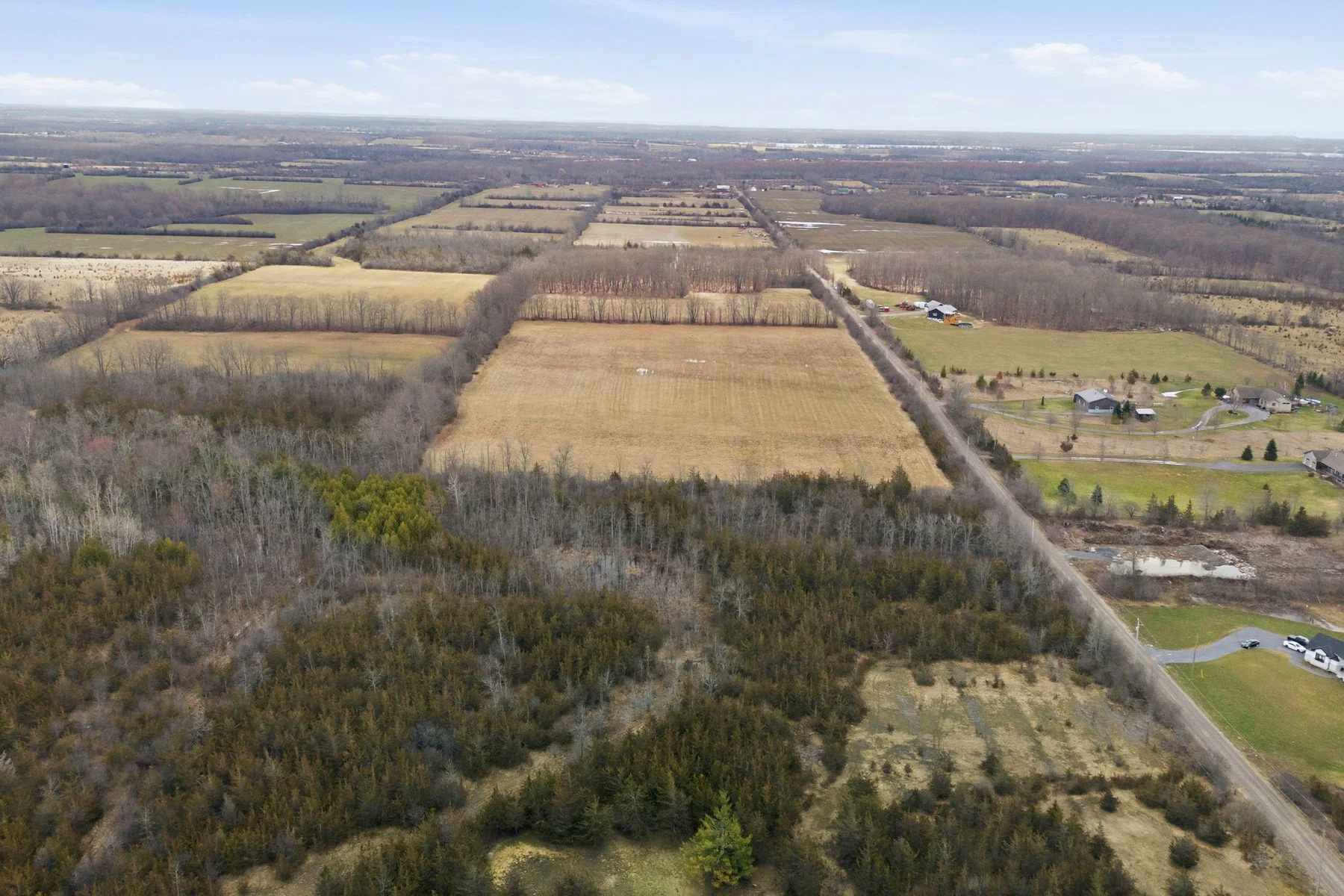
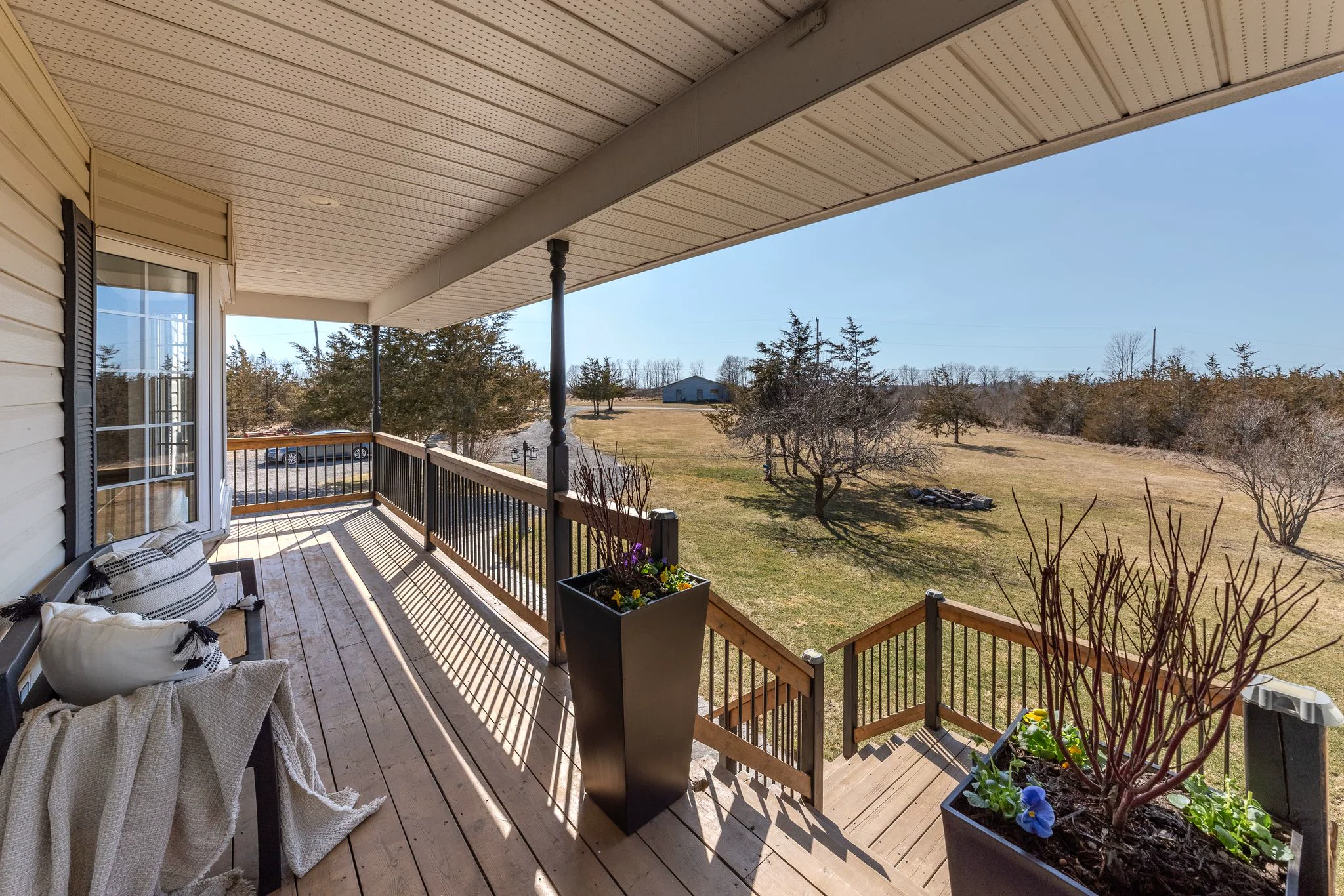
The land tells you what is possible. Frontage, setbacks, and where the septic bed sits all shape where a second unit can actually go.
Key Things to Know Before You Build
- By-law 140-2025 opened the door. Up to two additional units, three total, on most standard residential lots, as-of-right, no rezoning needed
- Only one detached unit. Either both additional units go inside the main house, or just one can be in a detached ancillary building
- A size cap applies. An ADU cannot exceed 50% of the main dwelling's floor area, with an exception for a full basement unit
- Servicing is the real gatekeeper. A Servicing Report is mandatory under 1.25 hectares; a Hydrogeology Report can be required at the Director's discretion on private services
- Detached AG and RU units must sit within 60 m of an existing building, but can be built to full principal-dwelling height (10 m)
- Development charges are gone for qualifying garden suites, roughly ten to thirty thousand dollars saved
- You still need a building permit and full Ontario Building Code and Fire Code compliance; floodplain lots are excluded
- The value is rental income or family housing, not a short-term rental workaround, which County rules have frozen
Frequently Asked Questions
Under the County's Comprehensive Zoning By-law 140-2025, adopted November 10, 2025, a lot with a single-detached, semi-detached, or townhouse dwelling can have up to two additional dwelling units, for a maximum of three total units, as-of-right, with no rezoning or minor variance required. Either both additional units go inside the principal dwelling, or only one of them can go in a detached ancillary building. An ADU cannot exceed 50% of the principal dwelling's floor area, it is not permitted in a regulated floodplain, and it still needs a building permit and demonstrated servicing, which on most County properties means water and septic. Always confirm the current numbers for your specific zone with the County before you plan around them.
The definitions matter because they change what you can build and where. A garden suite is an accessory dwelling unit that is meant to be temporary or portable and does not include a basement or crawlspace, so it sits on a slab or piers rather than a full foundation. A permanent detached second unit is a fully built structure with a foundation. Both count toward your total permitted units, but a garden suite is treated as removable and a permanent unit is not. If you are housing an aging parent for a defined period, a garden suite can be the simpler path. If you want a lasting rental building, you are looking at a permanent unit and a full permit.
Possibly, and this is the single most important thing a rural County owner needs to plan for. Most of Prince Edward County is on private well and septic rather than municipal services. By-law 140-2025 permits an ADU only where adequate water and sanitary servicing can be demonstrated, and it sets two triggers. A Servicing Report is mandatory for any ADU on a lot smaller than 1.25 hectares, about three acres, regardless of zone. Separately, a Hydrogeology Report can be required on private-services land at the discretion of the County's Director of Development Services, the phrasing is "as required," so it is a case-by-case call rather than automatic. Large well-and-septic acreages usually clear the 1.25-hectare threshold, so the Hydrogeology Report is the one they should actually expect to face. Confirm your servicing early, before you spend money on drawings.
In many cases yes. Under By-law 140-2025, both an Additional Dwelling Unit and a Garden Suite are permitted accessory uses in the Agricultural (AG) and Rural (RU) zones, subject to the general provisions. The conditions are specific: an ADU in a detached ancillary building must sit within 60 metres of an existing building on the lot, though it can be built up to the full principal-dwelling height of 10 metres in those zones. The unit cannot exceed 50% of the principal dwelling's floor area, must share the same parking and yards, and cannot use a new driveway. AG lots have a 40-hectare minimum lot area and RU lots a 10-hectare minimum, so most true farm and rural parcels sit well above the 1.25-hectare Servicing Report threshold. Verify the specifics for your parcel directly with County planning before you commit.
You should not plan an ADU around short-term rental income. Prince Edward County froze new secondary residence short-term accommodation licences in September 2022 and applies density caps in most zones, so a new unit is not a path around those rules. Treating an ADU as an Airbnb loophole would be building on a foundation the County has deliberately closed. The defensible value of an ADU here is long-term rental income or housing family. County rents have risen sharply and purpose-built rental supply is very thin, so a legal long-term unit is genuinely needed. If short-term income is your goal, read the County's short-term accommodation rules first so you understand what is actually allowed.
Yes. Bill 23 eliminated development charges for qualifying additional residential units, including garden suites, across the province. Depending on the municipality and the project, that is roughly ten to thirty thousand dollars that used to be charged and no longer is. It is a meaningful saving that shortens the payback period on a rental unit. It does not remove the other costs, building permit, construction, and servicing work such as a septic upgrade, but it takes one of the larger fixed charges off the table.

Wondering What Your Land Could Do? Let's Talk It Through.
Whether you own a rural acreage, a village lot, or a farm and want to know if a second unit makes sense, send me a note. Practical, specific guidance grounded in how things actually work in the County, not a sales pitch.
The County market, once a month: no noise.
CLAR MLS data, honest analysis, and what it means for buyers and sellers across PEC, Belleville, Brighton, and Quinte West. One email a month.
- Sales volume, prices & days on market, straight from CLAR
- What's moving and what's sitting, and why
- Local lifestyle and real estate insight from someone who lives it