
This one is close to home, quite literally. The gardens around our place are my wife Janna's work, and her real passion. Over the years she has turned the ground around our house into something that hums in July, coneflowers and bee balm loud with bees, milkweed holding monarchs, a wave of colour that changes week to week. Not long ago, a garden like that would have made some buyers hesitate. Too wild. Too much to keep up. Today I am watching that reaction flip, and in some markets a pollinator-friendly garden is quietly adding to what a property is worth. Here is the picture.
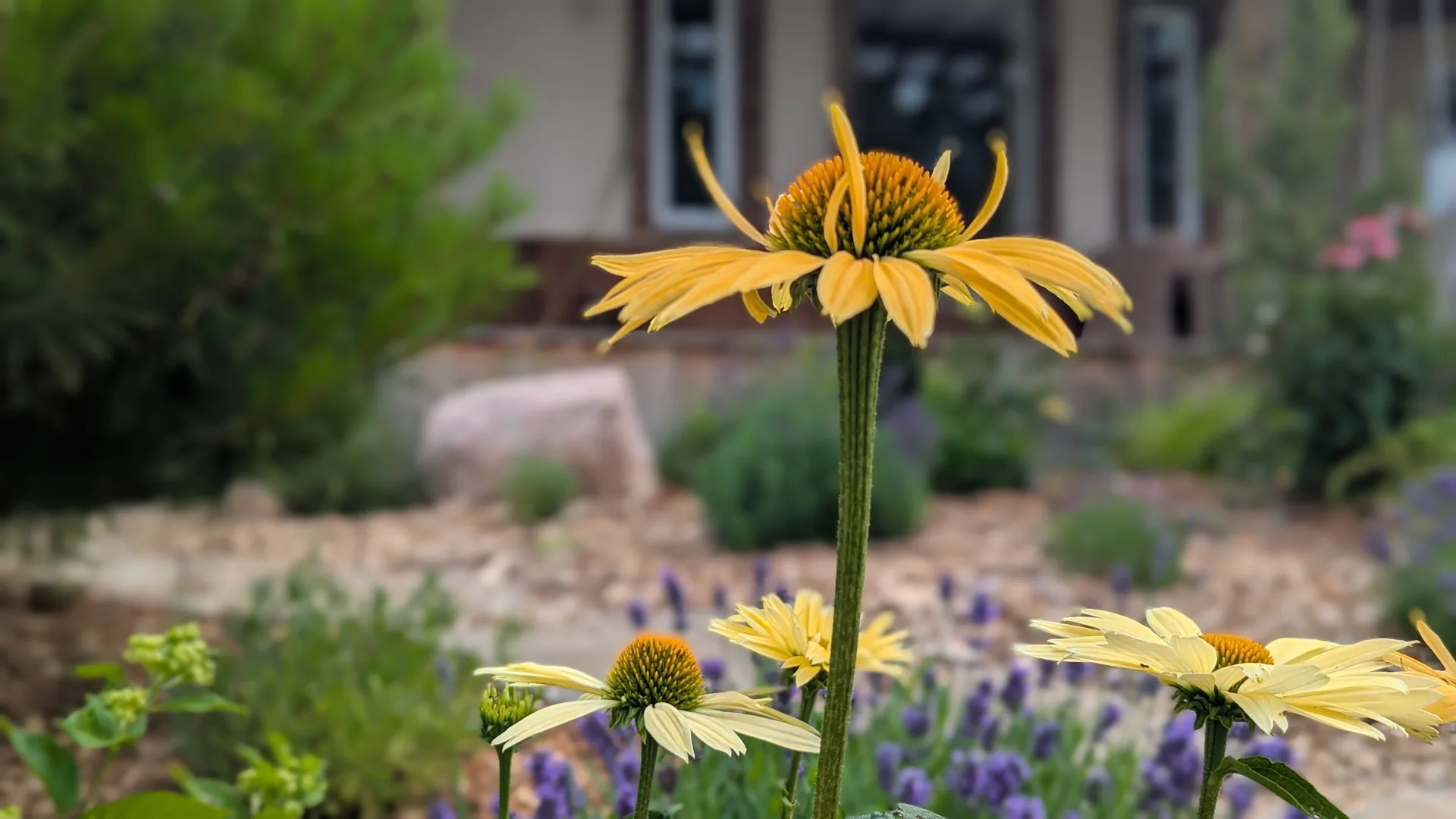
The gardens around our house in the County, mid-July. Janna's work, and the reason bees find us before the neighbours do.
The Old Story: Naturalized Meant Neglected
For a long stretch, the manicured lawn was the standard every property was measured against. A flat green carpet, edged and trimmed, read as "cared for." Anything looser read as the opposite. Tall native plants, seed heads left standing, a bed that spilled past its border, plenty of buyers saw that and thought unfinished, or a chore waiting for them.
That wasn't only taste. Some municipalities carried tall-grass and weed bylaws written decades ago to deal with genuinely abandoned lots, and they didn't always distinguish between a neglected yard and an intentional habitat garden. Homeowners' associations enforced turf. The whole culture pointed one direction, and appraisers and agents priced to it because that is what the market rewarded.
What Changed: Buyers Started Asking For It
A few things shifted at once. Pollinator decline made the news, and people learned that bees, butterflies, and the food supply are connected in ways that are hard to unsee. Water restrictions and hotter, drier summers made the thirsty lawn look like a liability instead of a status symbol. And a younger wave of buyers simply started wanting a yard that does something.
Real estate reflects what buyers ask for, and the asks changed. Low-maintenance. Water-wise. Native. A back yard that feeds something. I hear versions of this at showings now that I rarely heard five years ago, especially from buyers coming out of the city looking for a different relationship with their land.
What the Research Actually Says
Let me be careful here, because this is where it is easy to oversell. The broad, well-established finding is that quality landscaping raises a home's value and helps it sell faster. A widely cited University of Vermont study found good landscaping could lift resale value meaningfully and shorten time on market. Virginia Cooperative Extension's work on perceived home value points the same way: buyers assign real dollars to strong, mature plantings.
The newer and more specific finding is that native and sustainable landscaping now carries its own premium with a growing share of buyers, rather than the discount it once did. Research on sustainable landscaping features has associated them with resale gains, and industry commentary in 2025 and 2026 increasingly frames pollinator gardens as a selling point, not a deterrent.
The honest caveat: the size of that effect depends heavily on design quality, plant maturity, and the local market. Some regions have fully caught up. Rural Ontario is still catching up. I would not promise a seller a specific percentage. I would tell them the direction of travel is clear.
The Difference Between Wild and Intentional
This is the whole game, and it is good news, because the fix is mostly free. Pollinators care about plant function, not tidiness. Bees and butterflies do not need visual chaos, which means you can support them and keep sharp curb appeal at the same time. The signals that tell a buyer "this is designed" are simple and repeatable:
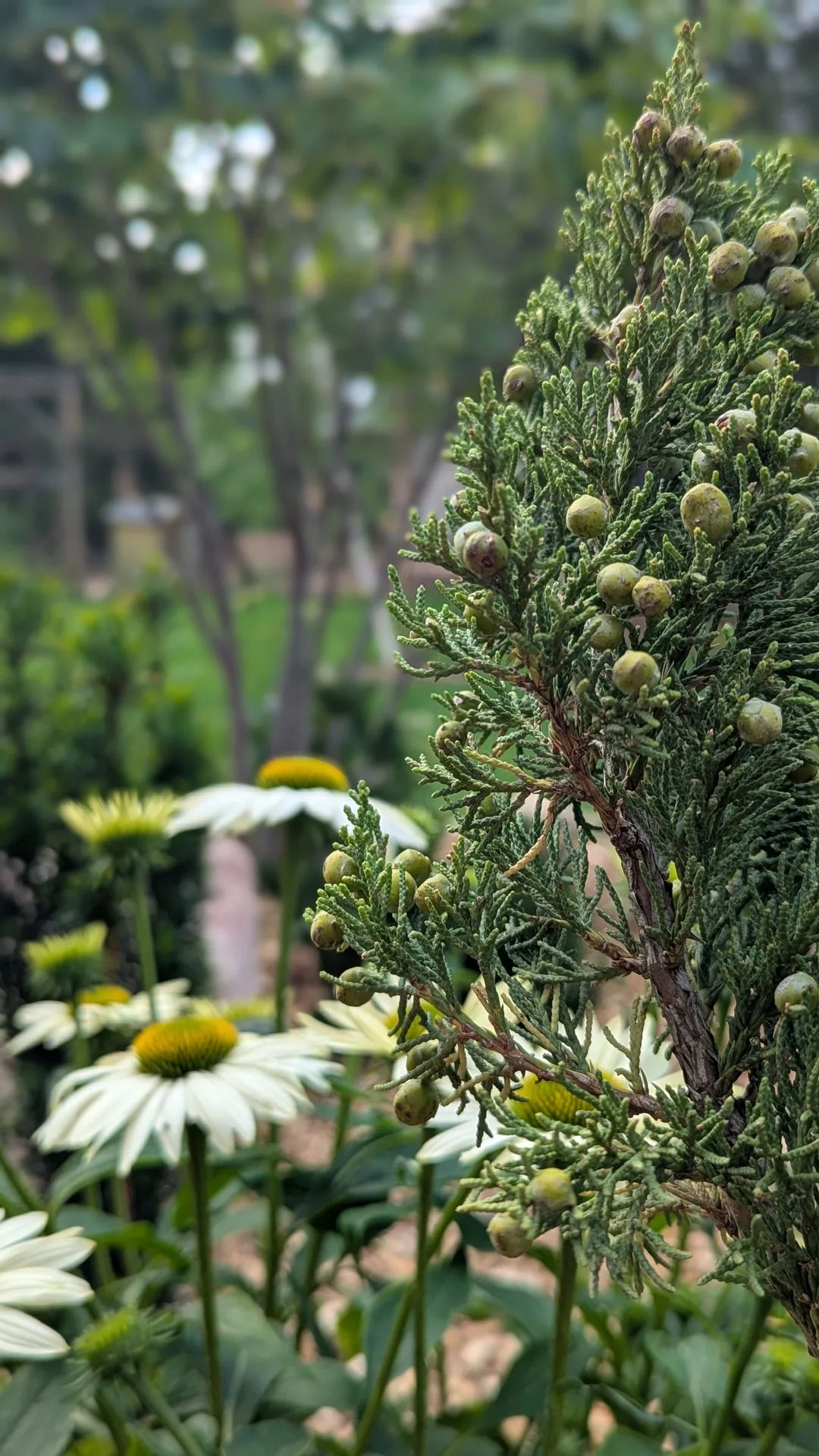
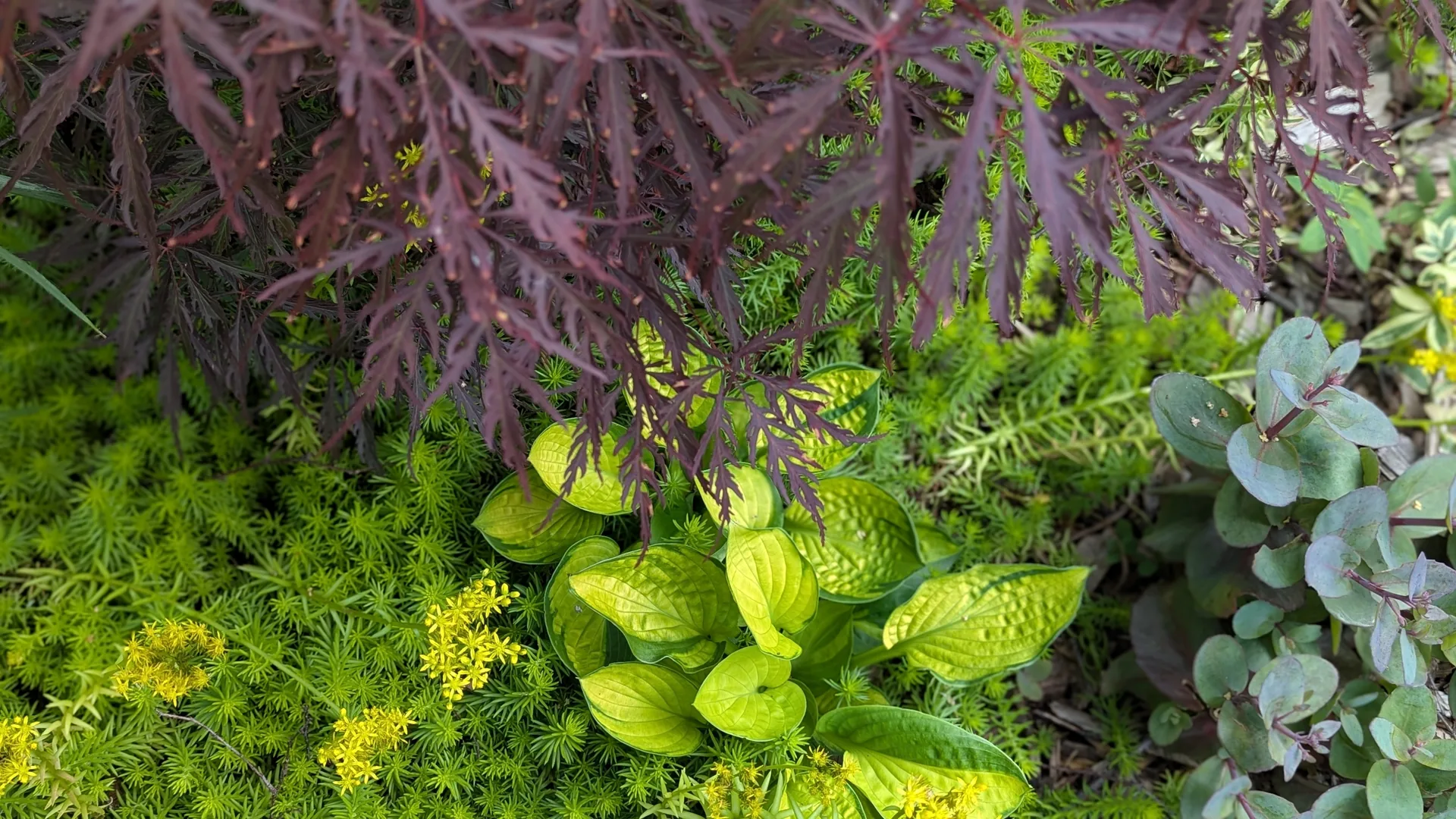
Left: the plants doing their work, coneflowers the pollinators love. Right: layered foliage and texture, the sign of a garden that is designed, not just grown.
A clean, defined edge around every bed, mowed strip or cut border, is the single strongest cue. A layer of mulch makes new plantings read as finished. Repeating a few plants in groups reads as a plan rather than a scatter. Keeping the tallest species back from the front, and leaving a mowed frame of lawn or path around a wilder centre, lets you have the habitat without the "abandoned" look.
Why This Fits Prince Edward County
The County is almost tailor-made for this. This is farm and wine country with a strong environmental streak, where a formal turf lawn can actually look out of place against the fields and the water. A garden of native perennials reads as belonging here in a way a golf-course lawn never quite does.
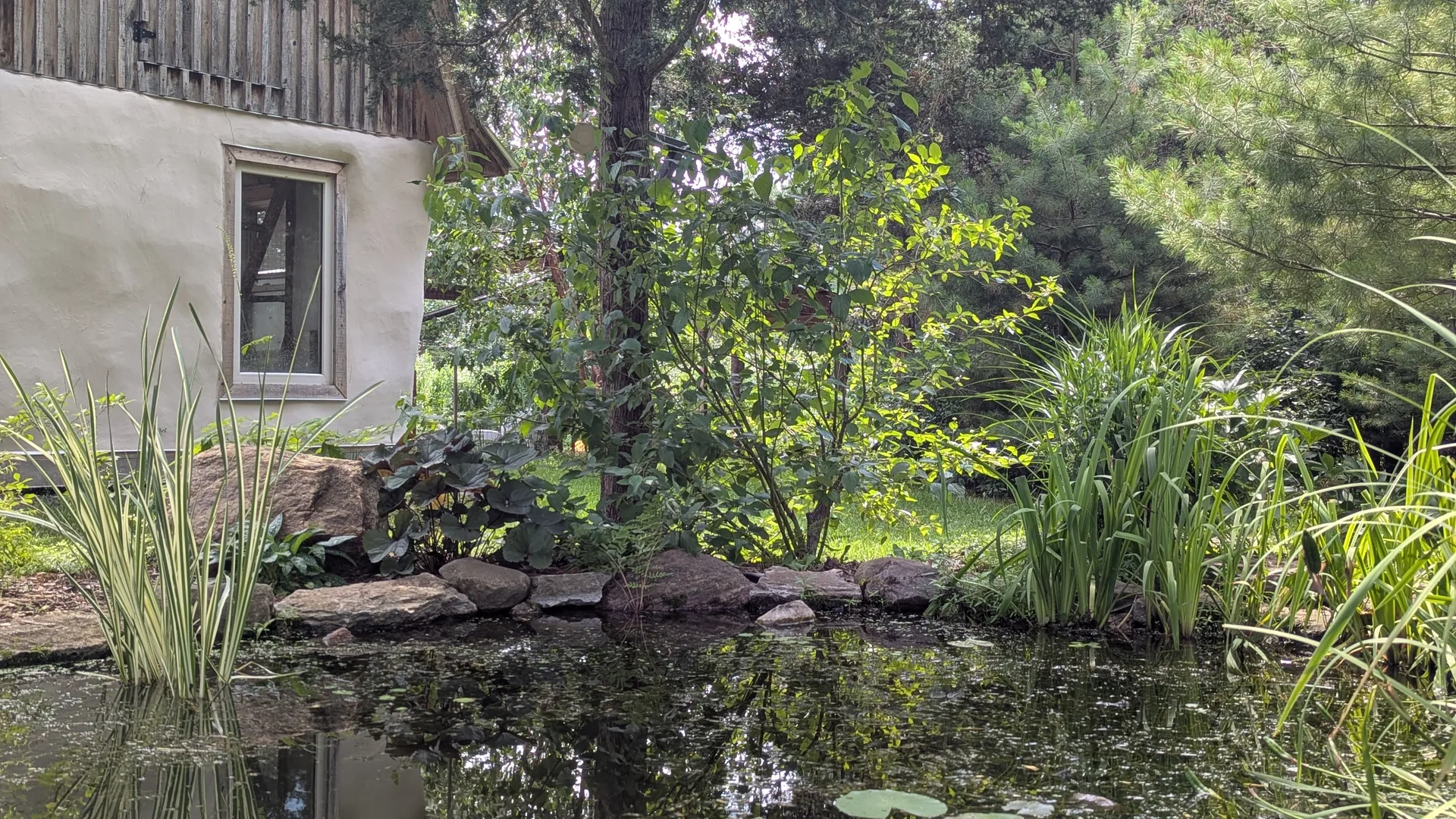
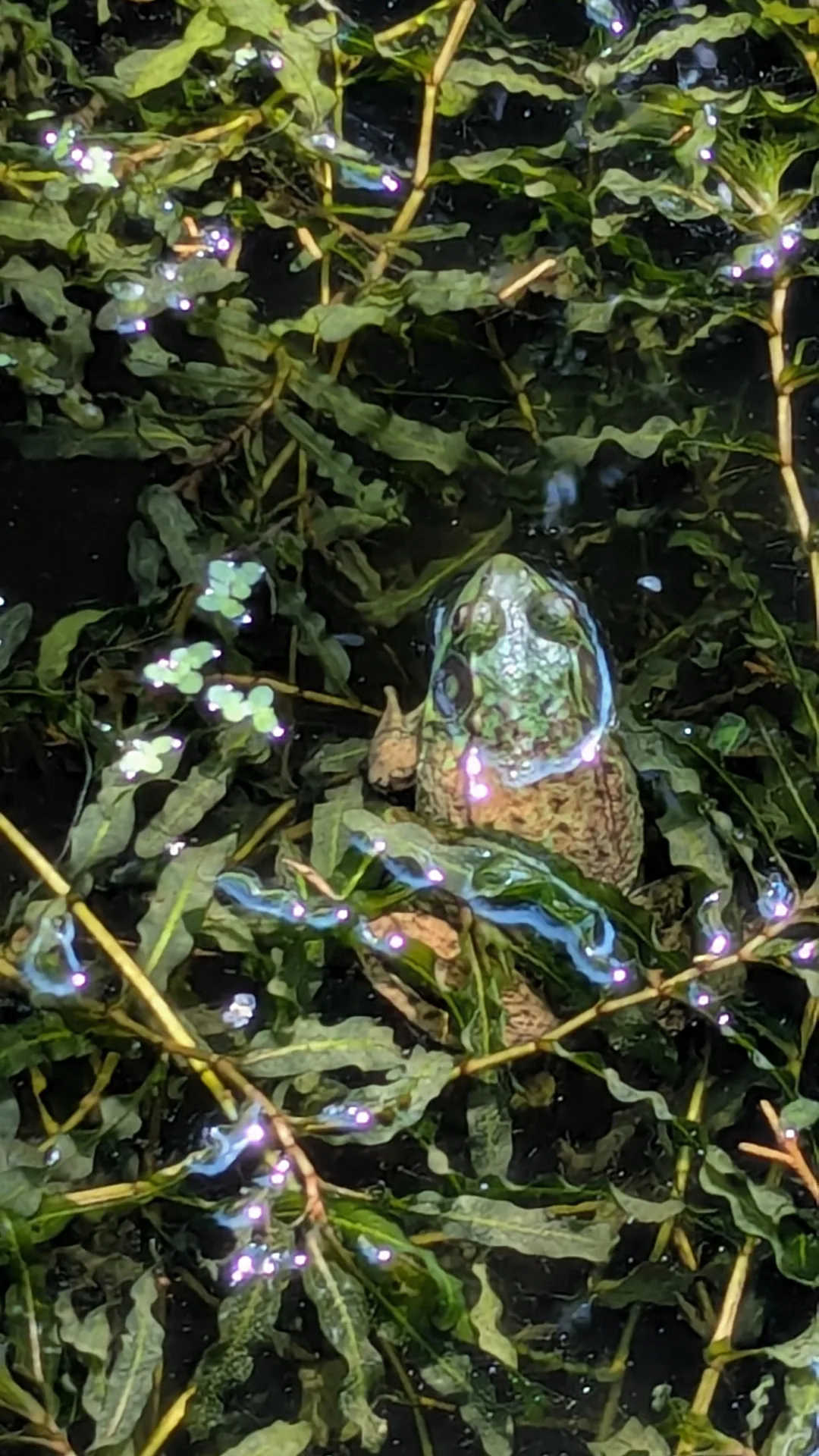
The pond by our house, edged in stone and native grasses, and one of the frogs that moved in on their own. That is usually how you know it is working.
The practical side lines up too. Most rural properties here run on well water, so a low-water native garden is easier on the well and on you through a dry County summer. Wind off the lake and thin, dry soils in parts of the County are exactly the conditions native plants are built for. And a huge share of buyers here are second-home owners or short-term rental hosts who cannot be on site every weekend to fuss over a lawn. A garden that mostly looks after itself is a genuine selling feature to that buyer.
Where This Is Heading
I don't think every market has caught up yet, and I won't pretend rural Ontario is where parts of the world already are on this. But the direction is not really in doubt. Climate pressure isn't easing, buyer values are shifting, and the generation forming its taste right now sees a pollinator garden as a feature, not a flaw. I expect the discount that naturalized gardens once carried to keep turning into a premium, unevenly, market by market, but steadily.
Watching Janna build these gardens, I have come to think she was early rather than unusual. She did it because she loves it, and because it is a more natural way to work with the land. That it is also becoming good for property value is a bonus she was never chasing. If you are weighing whether a garden like this helps or hurts when you sell, my honest read is that the ground is moving in its favour, and that the homeowners planting for pollinators today are going to look prescient in a few years.
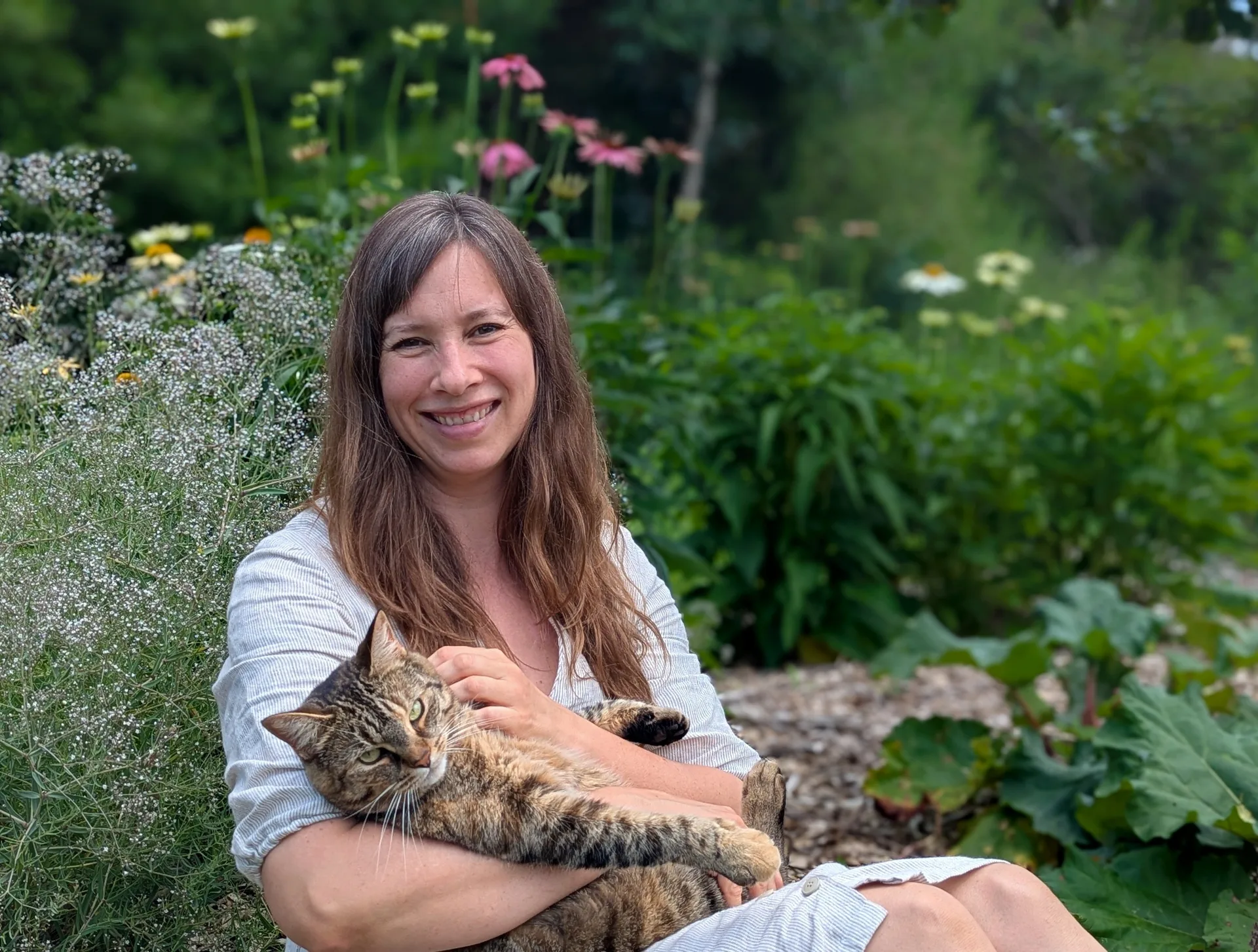
Janna in the middle of her work. The gardens are her passion, and watching them fill in year after year has been one of the quiet joys of living here.
"Frame the wild. The same native planting reads as neglect inside a ragged border and as intention inside a clean one. Design is what turns a garden from a question mark into a selling feature."
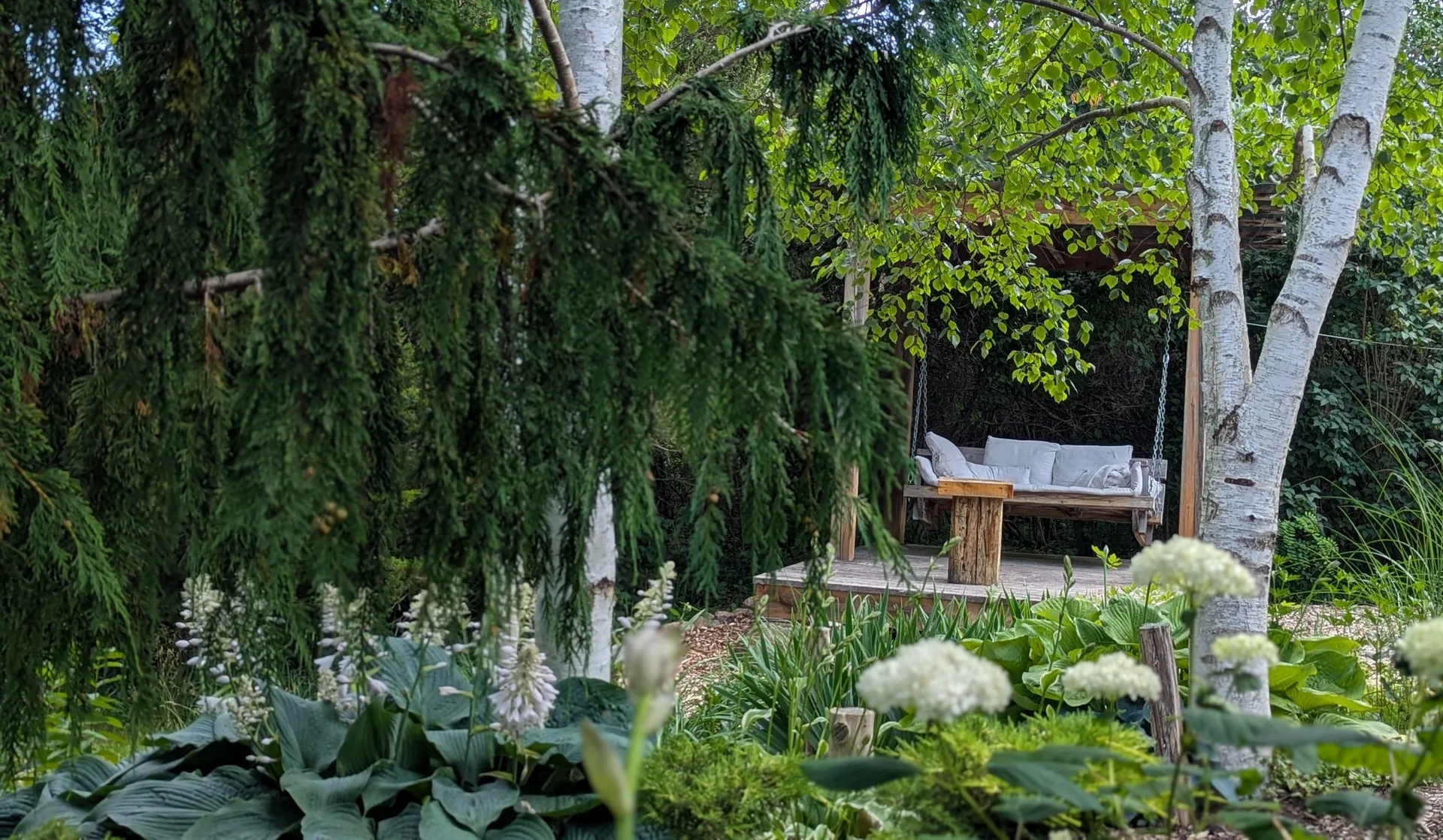
A shaded corner under the birches. Curb appeal is the first impression, but this is the part that makes people want to stay.
A Few Locals Worth Knowing
You do not have to figure this out alone. To have a garden like this designed, Ben O'Brien of Wild by Design works right out of Picton. To plant it yourself, two nearby native nurseries have you covered: Dropseed just outside Picton and Natural Themes up in Frankford. And to learn the ropes first, conservation biologist Ewa Bednarczuk runs the Neighbourhood Habitat School on exactly this. Good people, all close to home.
If You Have a Naturalized Garden and a Home to Sell
- Define every edge, a mowed strip or cut border is the fastest way to read as intentional
- Mulch the beds, it makes even young plantings look finished and cared-for
- Repeat and group plants, clusters read as a plan, scatter reads as chance
- Keep tall species back, leave a lower, tidier frame at the front and along paths
- Lean into low-maintenance, market the water-wise, self-sufficient side to second-home and rental buyers
- Choose proven natives, County-hardy species give the longest bloom for the least work
- Match the setting, on a rural or waterfront lot a native garden often fits better than turf ever did
- Set honest expectations, treat it as curb-appeal and speed-of-sale value, not a fixed dollar line item
Frequently Asked Questions
They can, when they are well designed. Broad research on landscaping consistently shows that quality plantings raise a home's perceived value and can shorten time on market, and buyer demand for low-maintenance, water-wise, native and pollinator-friendly gardens has grown quickly in recent years. The value comes from design quality, plant maturity, and how well the garden reads as intentional, not from wildness alone. In some markets a thoughtfully naturalized garden is now treated as a genuine asset rather than a deterrent.
Not when they are maintained and clearly designed. The old assumption that native or naturalized plantings look neglected comes from gardens with no visible structure. Add a clean mowed or mulched edge, keep beds defined, and repeat a few plants for cohesion, and the same garden reads as cared-for. Pollinators respond to plant function, not visual chaos, so you can support them and keep strong curb appeal at the same time.
Intention and edges. An overgrown yard has no defined shape and no evidence of a plan. A pollinator garden uses chosen native plants arranged in beds with clear borders, a layer of mulch, and repeated groupings that signal it is managed on purpose. The plants may be the same wild species in both cases, but the framing is what tells a buyer, an appraiser, and a neighbour which one they are looking at.
Usually less than a conventional lawn once established. Native plants are adapted to the local climate and soil, so they generally need less watering, no chemical fertilizer, and little to no pesticide. The main work is in the first year or two while roots establish, plus a seasonal cutback and edge tidy. For second-home owners and short-term rental hosts who cannot be there every week, that lower upkeep is part of the appeal.
Reliable Ontario natives for County conditions include purple coneflower, black-eyed Susan, wild bergamot (bee balm), New England aster, common and butterfly milkweed for monarchs, goldenrod, wild columbine, and little bluestem grass. These handle sun, wind, and dry spells well and give a long bloom season from early summer into fall. Milkweed matters in particular because it is the only host plant monarch caterpillars can use.
If you have a full season before listing, it can be a smart, low-cost way to improve curb appeal, especially on a rural or waterfront lot where a manicured lawn looks out of place anyway. If you are listing within weeks, focus on tidying and defining what you already have rather than planting something that has not filled in. A patchy new bed helps less than a clean edge on an existing one. Ask your agent what buyers in your specific area are responding to.

The County market, once a month: no noise.
CLAR MLS data, honest analysis, and what it means for buyers and sellers across PEC, Belleville, Brighton, and Quinte West. One email a month.
- Sales volume, prices & days on market, straight from CLAR
- What's moving and what's sitting, and why
- Local lifestyle and real estate insight from someone who lives it