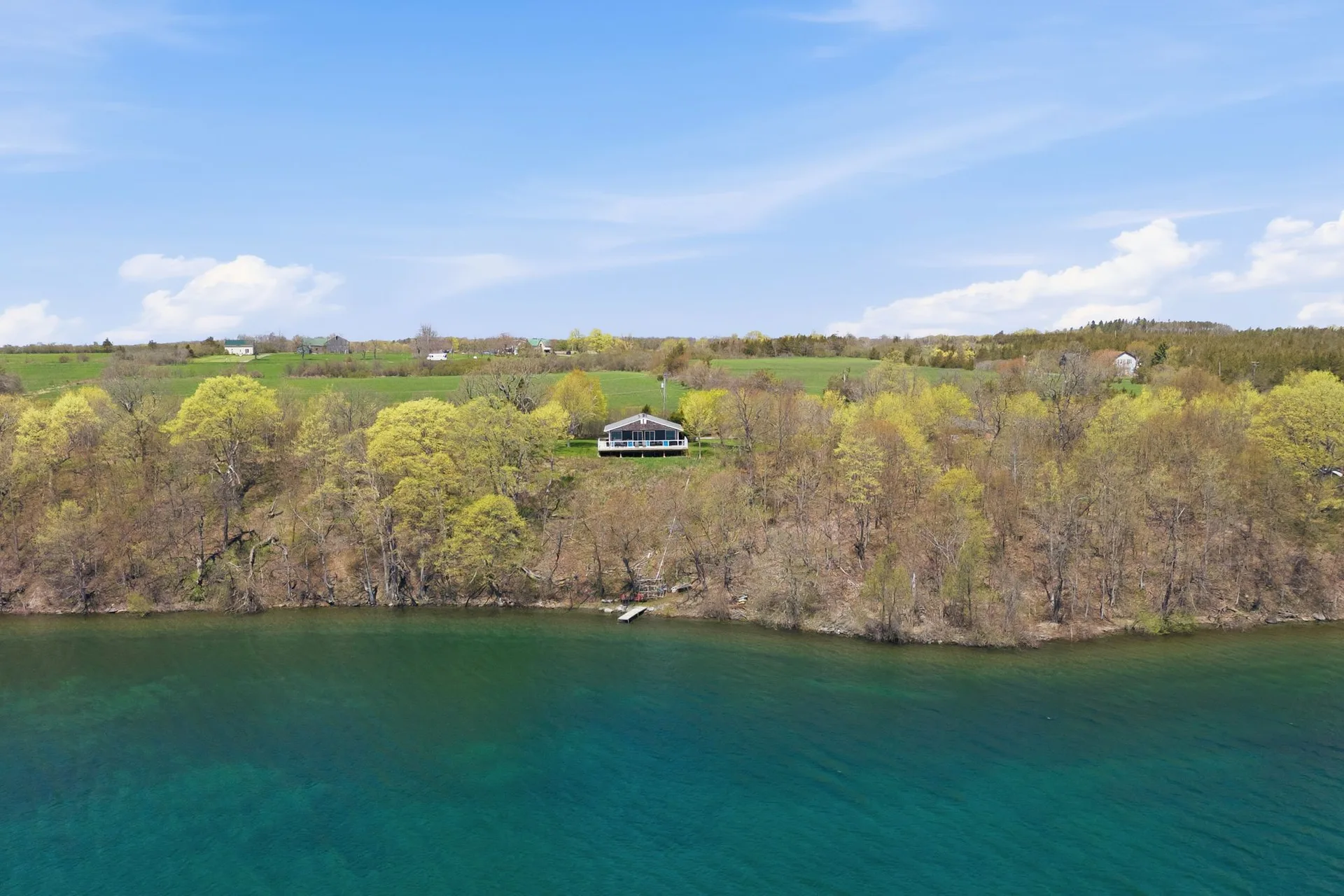

Most people who visit Prince Edward County don't make it to South Marysburgh. They stop at the wineries in Hillier, walk Wellington's main street, have dinner in Picton, and head home thinking they've seen the County. They haven't. Not really.
South Marysburgh is the tip of the peninsula, the southeastern end, where the roads get quieter, the waterfront gets more private, and the history gets genuinely strange. A stretch of Lake Ontario so treacherous it swallowed more than two-thirds of every vessel ever lost on the lake. A barley shipping port that once loaded 12,000 bushels before breakfast. A bird observatory at the tip of the County that has recorded over 300 species on the Atlantic Flyway since the 1960s. That's South Marysburgh. The people who find their way here tend to stay, not because there's a lot going on, but because the thing that's here is real.
What South Marysburgh Is Actually Like
There's no boutique strip. No gallery row. South Marysburgh is the County's least commercially developed ward, by design and by geography. The roads wind, the land rolls toward the water, and the communities are small enough that locals know each other's names. The one village that qualifies as a village, Milford, calls itself "the hamlet of friendliness," which tells you everything about the pace.
What South Marysburgh has instead of amenities is character. Deep, specific, historically dense character that the more polished parts of the County are still building toward. The cheese factory has been running since 1901. The chamber music school has been drawing young string players from across North America since 1987. The bird observatory has been recording migration data since the mid-1960s. This is not a place that discovered itself recently.
- South Bay, a provincially significant wetland with sheltered water and exceptional fishing, bordered by private waterfront properties and the kind of shoreline that takes effort to find. Walleye, perch, pike, bass, and Lake trout. Charter fishing runs about $200 per person.
- Prince Edward Point Bird Observatory, positioned at the southeastern tip of the County within two major migratory flyways. Over 300 species recorded since the mid-1960s. One of eastern Ontario's premier birding sites, and largely unknown outside serious birding circles.
- Music at Port Milford, a nationally recognized chamber music summer academy and festival that's been running on South Bay since 1987. Four-week intensive program for young string players and pianists, plus a professional concert series. It's the kind of institution that belongs in a much larger city, and chose to stay here.
- Little Bluff Conservation Area, 28 hectares of limestone bluff trails with 20-metre cliffs overlooking Prince Edward Bay. Aqua blue water below, barrier beach at the base, and wildlife that includes great blue herons, bitterns, and Virginia rails. Fifteen dollars to park. Worth every cent.
The people who come to South Marysburgh looking for a busier version of the County leave disappointed. The people who come looking for the real thing stay longer than they planned.
The History Is Genuinely Remarkable
South Marysburgh was named for Princess Mary, Duchess of Gloucester and Edinburgh, following the American Revolution. The first settlers were United Empire Loyalists who crossed into British territory after the war, among them German mercenaries who had fought as Crown soldiers, along with officers and men of the 84th Regiment of Foot (Royal Highland Emigrants), one of the prominent regiments of the conflict. They were given land grants for their loyalty and never left. That heritage runs straight through the culture of this place.
What they built along the waterfront became, for a few extraordinary decades in the 19th century, one of the most productive small shipping economies in Ontario. Port Milford became the centre of what historians call "Barley Days", when Prince Edward County was the breadbasket of the Great Lakes trade and its barley fed breweries from Toronto to the American northeast. In 1867, Port Milford shipped 330,225 bushels. By 1881, that number was 816,132. Teams worked from daybreak loading schooners at the dock, a full 12,000-bushel hold in a single day, until the ships grew too large for the harbour and the trade moved north to Picton, where the water was deeper.
Milford, a few kilometres inland, was a different kind of port entirely. Founded in 1808 as a timber milling centre, it earned the nickname "the inland seaport" for its shipbuilding history. The Black River was dredged by teams of horses to eight feet of depth, enough for schooners, steamers, and scows to be floated downriver, carrying 100-foot logs destined for British shipyards as masts. The first vessel built here, the Mary of Milford, was constructed so high on a riverbank that it had to be hauled on sleighs a full mile to the launch site.
And then there are the shipwrecks. The waters off South Marysburgh are known to divers and maritime historians as the Marysburgh Vortex, one of the most treacherous stretches of inland water in North America. More than two-thirds of every vessel ever documented as lost on Lake Ontario went down in these waters. The Duck Galloo Ridge, a line of shoals and rocky islands reaching from Prince Edward Point across toward New York State, amplified storm effects and claimed ships throughout the 19th century. Estimates place 270 to 500 wrecks in the zone bounded by Wolfe Island, Mexico Bay, and Point Petre. The Mariners Park Museum in Milford holds hundreds of artifacts recovered from early diving expeditions, anchors, ship's bells, navigation instruments, from vessels that never made it past this corner of the lake.
The community of Black River tells a slightly different chapter. Surveyed in 1874 and booming within a decade, it had wharves, storehouses, a brickworks, a blacksmith, a sawmill, a post office, a church, a schoolhouse, and a cheese factory, the full infrastructure of a self-sustaining 19th-century community. The cheese factory formalized in 1901 as a dairy farmers co-operative under the name Black River Cheese, running as an independent operation for over a century. The co-operative was acquired by Gay Lea Foods in 2016 and production moved to Ivanhoe, but the Milford retail shop still carries the Black River name, a small remnant of an agricultural legacy that ran here for more than a hundred years.
Communities Within South Marysburgh
South Marysburgh covers the entire southeastern tip of Prince Edward County. Five communities make up its character, each distinct, each small.
- Milford, the only true village in the ward, and the one to watch. A historic timber town with a preserved 1860s Methodist church now operating as the Mount Tabor Community Playhouse, a 95-seat black box theatre hosting Prince Edward Community Theatre, the Marysburgh Mummers, indie films, and live concerts. The Black River Cheese shop is here, a retail holdover from a co-operative that ran continuously from 1901 until Gay Lea Foods acquired the brand in 2016. The river runs through it. Milford has the quiet energy of a community rediscovering itself, one small business at a time.
- Port Milford, more locality than village, but historically the heart of this ward. The Mariners Park Museum sits here with its extraordinary collection of shipwreck artifacts, a relocated lighthouse from False Duck Island, and the story of Fort Kente. The waterfront access to South Bay is some of the best in the ward for boating and fishing.
- Waupoos, a waterfront community on the northeastern shore with a disproportionate claim to fame. Waupoos Estates Winery was the first winery established in Prince Edward County, and remains the only one with direct waterfront on Lake Ontario, 700 feet of it, on 100 acres, with 20 acres of established vineyard growing 18 wine varieties. The Clafeld Cider House on the same property produces award-winning cider from 16 apple varieties. Waupoos Marina runs daily sailing cruises. For a community this small, the draw is real.
- Black River, a quiet agricultural community built on the bones of a 19th-century grain and cheese economy. The original wooden swing bridge that allowed schooners to pass upriver to Milford is long gone; the 1967 concrete bridge that replaced it is not romantic, but it crosses the same river. The Black River Cheese retail shop is the surviving nod to that legacy, the co-operative itself was acquired by Gay Lea Foods in 2016 and cheese production moved out of the County, but the store still draws visitors through Milford. Canoeing the Black River is a local favourite that most visitors never find.
Birding, Cycling, and Why This End of the County Matters
Prince Edward County is known across Ontario as a cycling destination. South Marysburgh is where that reputation earns its best argument. The South Shore Cycling Route follows quiet country roads with long, uninterrupted views of Lake Ontario, flat to gently rolling, minimal traffic, and very few tourist attractions to interrupt the ride. Roads toward Waupoos and Cressy offer short scenic climbs with lake vistas that are hard to find anywhere else at this distance from Toronto. The 55-kilometre Big Island route, a local favourite, is described by experienced cyclists as among the finest rural road rides in the province.
The birding is serious. Prince Edward Point sits within two major migratory flyways, the Atlantic Flyway being one, and concentrates migrants at the tip of the peninsula in spring and fall in numbers that draw ornithologists and recreational birders from across eastern Canada. Over 300 species have been recorded here. The Prince Edward Point Bird Observatory has operated since the mid-1960s. Diving ducks, songbirds, raptors, and waterfowl use this corridor. Properties with South Bay views or proximity to the Point carry built-in value for buyers who understand what they're getting.
Who South Marysburgh Is For
South Marysburgh is not for everyone. The buyers who end up here and stay tend to want something specific, and to know why they want it.
- Cyclists and active outdoor buyers, if quiet roads, long lake views, and minimal traffic are non-negotiable, this is the end of the County to look in. The infrastructure for cycling here is exceptional, the crowds are nonexistent, and the routes are genuinely world-class.
- Birders and naturalists, the Atlantic Flyway, Prince Edward Point, South Bay's provincially significant wetlands, and 300+ recorded species at the Observatory make this one of the most significant birding sites in Ontario. Buyers who care about this know it already.
- Waterfront cottage buyers, South Bay waterfront is more private, more sheltered, and often more affordable than Lake Ontario-facing properties elsewhere in the County. STA licences are still obtainable here in a way that's becoming harder in the core County wards.
- History and heritage buyers, the Loyalist settlement history, the barley shipping era, the Marysburgh Vortex, the inland seaport of Milford, for buyers who want a place with a real story behind it, South Marysburgh is unusually rich.
- People who want to be left alone, genuinely. Not semi-rural with a wine bar down the road. South Marysburgh offers privacy at a level that the central County can no longer deliver. If that's the priority, this is the ward worth looking at.
The Market
Property Types and Price Ranges
South Marysburgh offers some of the most private waterfront in Prince Edward County, along with rural acreage, heritage farm properties, and recreational land that rarely comes to market through any channel other than word of mouth or a well-connected local agent. Prices have moved meaningfully since 2020 but remain below the central County premium. The following reflects current market conditions.
| Property Type | Typical Range | What to Expect |
|---|---|---|
| Rural residential & acreage | $450K,$700K | Older farm homes, rural bungalows with land, and hobby properties. Best entry point into the ward. |
| South Bay waterfront | $650K,$1.1M | Sheltered, private cottage waterfront. Properties with active STA licences command a meaningful premium. |
| Lake Ontario waterfront | $900K,$1.5M+ | Open-water exposure, dramatic views, significant privacy. Rarely listed and typically held for years. |
| Large acreage & farm estates | Priced to the property | Varies significantly by land quality, road frontage, outbuildings, and income potential. Best to evaluate with local guidance. |
One thing worth noting: South Marysburgh is one of the areas of PEC where a short-term accommodation (STA) licence is still realistically attainable for new owners. The County's licensing program is administered through municipal planning, and properties in this ward, particularly on South Bay, have an established history of STA use. For buyers where rental income is part of the decision, this matters.
The Honest Take
What You Should Know Going In
The same honest conversation I'd have with any buyer in any community.
- Services are thin. Milford is the closest thing to a village core, and it's a hamlet. Groceries, hardware, and most daily errands mean a drive to Picton (20 minutes) or beyond. This is genuinely rural.
- You will drive everywhere. No transit, no walkable amenities, no bike lanes between communities. A car is not optional. If driving long-term is a health concern, plan around it now.
- Internet connectivity varies. South Marysburgh is not the most connected part of the County. Some properties have good rural broadband; others rely on LTE or satellite. Check the specific address before you commit.
- The trades book out, same as all of PEC. Finding a good plumber, electrician, or contractor on short notice is difficult in summer. Plan renovation and maintenance timelines accordingly.
- Seasonal quiet is real quiet. In October, the County winds down. By January, South Marysburgh is very, very quiet. For people who want that, it's exactly right. For people who need stimulation year-round, it can be a long winter.
None of those are reasons not to buy here. They're reasons to buy here knowing what you've chosen, and the people who love South Marysburgh never had any doubts about that.
Common Questions
Frequently Asked Questions About South Marysburgh
South Marysburgh is the southeastern ward of Prince Edward County, Ontario, the tip of the County's peninsula where it reaches toward Lake Ontario. It's the least commercially developed of all PEC's wards, known for private waterfront on South Bay, exceptional bird migration at Prince Edward Point, quiet cycling roads, and deep maritime heritage. The main communities are Milford, Port Milford, Waupoos, and Black River.
The Marysburgh Vortex is a stretch of Lake Ontario off the southeastern tip of Prince Edward County with an extraordinary concentration of shipwrecks, estimated at 270 to 500 vessels. The natural hazard is the Duck Galloo Ridge, a line of shoals and rocky islands crossing Lake Ontario from Point Petre toward New York State, which amplified storm effects and sank ships throughout the 19th century. More than two-thirds of all documented Lake Ontario shipwrecks occurred in these waters. The Mariners Park Museum in Milford holds hundreds of artifacts from these wrecks and is open by donation from May to Labour Day.
South Marysburgh offers some of the most private waterfront in Prince Edward County, along with rural acreage, heritage farm properties, and recreational land. Inland rural properties typically range from $450,000 to $700,000. South Bay waterfront cottages, often with STA licensing already in place, range from $650,000 to $1.1 million. Lake Ontario-facing properties and larger waterfront estates trend higher. The area attracts cyclists, birders, nature lovers, cottage buyers, and second-home seekers who specifically want the quieter end of the County.
South Marysburgh is one of the top birding destinations in eastern Ontario. Prince Edward Point, at the tip of the County, sits within two major migratory flyways and has recorded approximately 300 bird species. The Prince Edward Point Bird Observatory (PEPtBO) has operated since the mid-1960s and is recognized as one of Canada's most significant migratory bird monitoring stations. In spring and fall, concentrations of diving ducks, songbirds, raptors, and waterfowl draw serious birders from across North America. South Bay's provincially significant wetlands provide additional habitat that few buyers, or competitors, talk about.

The County market, once a month: no noise.
CLAR MLS data, honest analysis, and what it means for buyers and sellers in Prince Edward County. One email a month.
- Sales volume, prices & days on market, straight from CLAR
- What's moving and what's sitting, and why
- Community guides and advice for buyers across PEC
No spam. Unsubscribe any time.