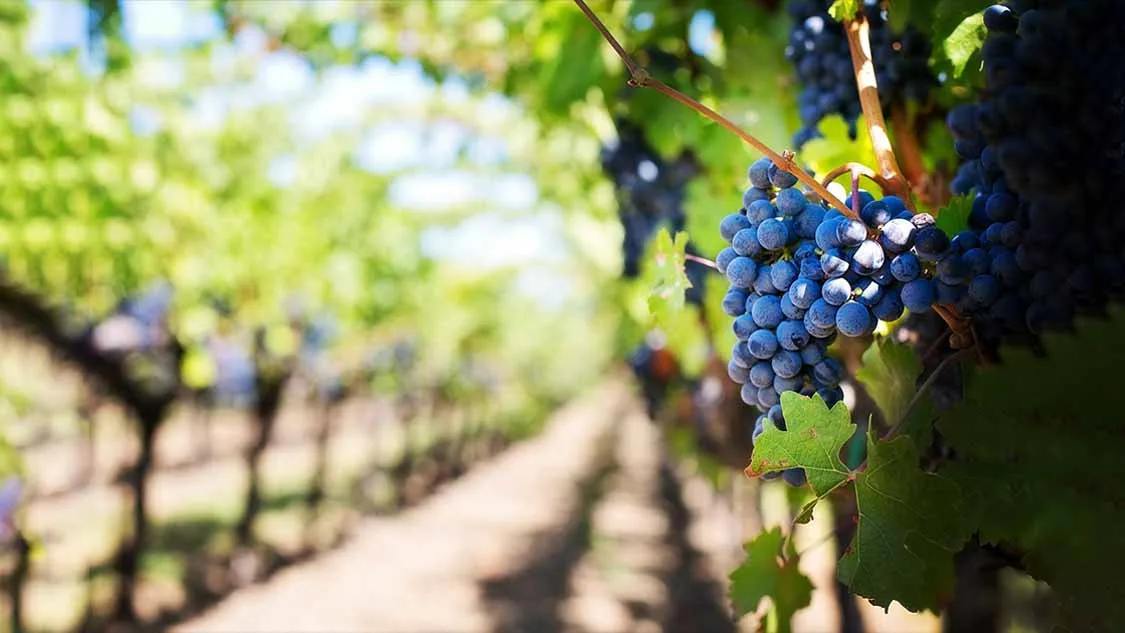

Thirty years ago, Hillier was apple orchard country and tomato fields. The land was flat, the roads were quiet, and nobody was talking about Burgundian varietals or limestone minerality. It was just the County, working farmland on the western edge of the peninsula, largely overlooked by anyone who didn't already live there.
Then something happened that almost nobody predicted. The soil turned out to be extraordinary. And a handful of stubborn, visionary winemakers decided to bet everything on it.
What followed is one of the most remarkable agricultural transformations in Ontario's recent history. Today, Hillier is the undisputed heart of Prince Edward County wine country, home to more wineries per square kilometre than anywhere else in the region, producing Pinot Noir and Chardonnay that have earned serious international attention. For buyers looking at real estate in this part of the County, that transformation matters, not just aesthetically, but for what it says about the long-term character and trajectory of this land.
What Hillier Is Actually Like
Hillier the hamlet is tiny, roughly 100 people, no town centre, no grocery store, no services of its own. What it has is the Loyalist Parkway running through it, spectacular pastoral countryside, and more winery signs than you can count on a Sunday afternoon drive.
The character here is pastoral and quiet, punctuated by the distinctive energy that wine tourism brings from May through October. On a summer weekend, the Hillier back roads have a gentle buzz, cars pulling into laneways, cyclists navigating between wineries, families picnicking on terroir they couldn't have named five years ago. By November, it goes almost completely still. The people who live here year-round tend to love that rhythm, full and social in the warm months, genuinely peaceful the rest of the time.
- Loyalist Parkway (Highway 33), the main artery through Hillier, running northwest toward Consecon and southeast through Wellington, Bloomfield, and Picton, then onward to the Glenora Ferry crossing into Lennox and Addington. Cycling this route past the vineyards in summer is one of the finest things you can do in Ontario.
- Hillier Clay Loam, the defining feature of this landscape, even if you can't see it. The thin, rocky soil over limestone bedrock that makes the grapes remarkable is the same soil your garden sits on. It drains beautifully and warms early in spring.
- Wellington is 10 minutes east, the nearest town with a main street, shops, restaurants, and the Wellington beach. Close enough to anchor daily life.
- Picton is about 20 minutes, the County's main service hub. Hospital, Saturday market, hardware, groceries, and everything else.
- A genuine wine country landscape, rows of vines, heritage barns, and rolling open fields. It's not a backdrop or a marketing aesthetic. It's what's actually here.
The soil is thin, rocky, and extraordinary. What grows poorly for most crops grows exceptionally for grapes, and that accident of geology changed everything.
How Hillier Became Wine Country
The story of Hillier wine country is really a story about soil. Beneath the surface of this part of the County sits a geological formation called Hillier Clay Loam, a thin layer of clay and shale gravel over decomposing fractured limestone. The soil is lean and rocky, which means it doesn't grow field crops particularly well. But for grapevines, it turns out to be nearly ideal.
Stressed by the thin, rocky soil, the vine roots push deep into the underlying limestone bedrock, where they find consistent moisture and drainage. The limestone itself imparts something that winemakers talk about as minerality, a distinctive brightness and acidity in the wine that you can't manufacture and can't replicate elsewhere. The rocky surface also conducts and retains heat, helping vines warm earlier in Ontario's short growing season. The moderating influence of Lake Ontario, which surrounds the peninsula on three sides, pushes the last frost earlier in spring and the first frost later in fall, extending the growing window just enough to ripen delicate varieties.
Prince Edward County received its Designated Viticultural Area (DVA) designation in 2007, Ontario's fourth, and its newest. But the conviction that this could be serious wine country came long before the official recognition. The first commercial vines in the County were planted in the mid-1990s, by people who saw something in the soil and the climate that others hadn't yet.
Today, Prince Edward County, and Hillier in particular, is producing Pinot Noir and Chardonnay that wine critics have compared favourably to Burgundy. That's not marketing copy. It's a reflection of what this particular soil, in this particular climate, consistently produces when the winemaking is done with care.
The Names Worth Knowing in Hillier
There are dozens of wineries in and around Hillier. These are the ones with the deepest roots in the area, the early believers whose decision to plant here before anyone was watching helped define what PEC wine country became.
- Closson Chase Vineyards, one of the County's founding producers, planting since 1999. More than 30 acres of south-facing limestone-rich soil under vine, planted high-density in the Burgundian style. Their Chardonnay and Pinot Noir are benchmarks for what this terroir can do. The estate is in Hillier, and their commitment to small yields and 100% French oak has set the standard for serious PEC wine.
- Stanners Vineyard, a family-owned boutique winery near the village, dedicated entirely to Pinot Noir. What began in 2003 as an experiment on quiet farmland has become one of the County's most characterful producers. They don't grow anything else. They don't need to.
- The Grange of Prince Edward, one of the earliest wineries in the County, set in a stunning heritage barn dating to 1826. The Grange was among the first to establish a serious reputation here, particularly for Cabernet Franc and Pinot Noir. The property itself is a piece of County history.
- Keint-He Winery & Vineyards, named after the Mohawk word for the Bay of Quinte, Keint-He holds some of the oldest vines in Prince Edward County, with plantings dating to 1997. They grow a range of Burgundian and Alsatian varieties, Pinot Noir, Chardonnay, Melon de Bourgogne, Pinot Gris, drawn from multiple vineyard sites selected for soil type, topography, and sun exposure. It's a winery with genuine depth of place.
Before the Boom: A Story From the Land
My in-laws were here before any of this.
They bought a plot of land in Hillier before Prince Edward County wine country was a phrase anyone used. The County was still the County, farmland and quiet, apple orchards and the odd vegetable stand. But they saw something in this part of the peninsula, and they put down roots.
For a time, they had their own grapevines. They tended them carefully, learned the work, and discovered what every serious grower here eventually discovers: maintaining a vineyard is a genuine and unrelenting undertaking. The pruning, the training, the canopy management, the disease pressure, the harvest timing, it's skilled agricultural work with no margin for error and no weekends off in the critical months. The romantic version of vineyard life and the working version are two very different things.
Eventually, they made a decision that turned out to be remarkable in hindsight: they sold their plot of land to Keint-He Winery. Those same vines are now part of one of the County's most respected producers, contributing to wines that carry a sense of this specific place in every bottle.
My father-in-law still tends a small couple-acre plot they kept, a vegetable garden every year, worked with the same care and attention he always brought to the land. It's a quieter relationship with the same soil. And it's a connection to this part of the County that I've come to understand over time as something genuinely rare: the knowledge of what this land was before the wine country story began, and what it took to become what it is.
They were here before the first winery signs went up. Before anyone called it terroir. Just a family, and land they believed in.
Who Hillier Is For
Hillier attracts a specific kind of buyer, and knowing whether you're that buyer before you start looking saves everyone time.
- Lifestyle buyers who want to live inside the wine country experience, not visit it. The people who buy in Hillier and stay are those for whom the landscape, the wineries, the cycling routes, and the seasonal rhythm are genuinely part of the life they're choosing, not an occasional outing.
- GTA buyers ready for a genuine change of pace, Hillier is about 2.5 hours from Toronto. It draws seriously from the city, buyers who've done the weekend trips, fallen in love with the character, and decided they want more of it permanently.
- People who value landscape above services, there are no services in the hamlet itself. You drive for everything. If you've already accepted that as the cost of entry for this kind of setting, Hillier is worth every kilometre.
- Investors with a long view, the wine country designation, the tourism draw, and the ongoing recognition of PEC wines internationally all point in one direction. Properties here with character and land have held value well and tend to find buyers.
- People who want space and quiet without isolation, Wellington is ten minutes away. The winery circuit means there's always something happening nearby in the warm months. It's rural without being remote.
The Market
Property Types and Price Ranges
Hillier carries a wine country premium, and that premium is real and sustained. Buyers aren't just paying for a house. They're paying for the landscape, the address, and proximity to one of Ontario's most distinctive lifestyle destinations. The following ranges reflect current market conditions and should be verified with current CLAR data before making any decisions.
| Property Type | Typical Range | What to Expect |
|---|---|---|
| Rural homes & older bungalows | $550K,$750K | Modest acreage, older construction, wine country address. Best entry point into the area. |
| Country homes (1,5 acres) | $750K,$1.1M | Updated or well-maintained homes with land, views, and proximity to the winery circuit. |
| Estate & character properties | $1.1M,$2M+ | Heritage buildings, significant acreage, distinctive architecture. A small but consistent segment of the market. |
| Vineyard & agricultural land | Priced to the property | Highly variable based on soil quality, vine age, improvements, and water access. Requires careful due diligence. |
The Practical Picture
Hillier has no services of its own. That's not a criticism, it's the nature of a hamlet. Day-to-day life here means driving, and knowing which direction to go.
- Wellington is 10 minutes east, the nearest real town. Main street dining, a LCBO, the Wellington beach, and the basics of daily life. For Hillier residents, Wellington is the practical anchor.
- Picton is about 20 minutes, the County's full-service hub. Hospital, full grocery options, Saturday farmers market, hardware, trades, and everything else. Most serious errands end up here.
- Belleville is about 35,40 minutes northwest, full urban services, Costco, medical specialists, and the 401 corridor. Accessible when you need it, comfortably removed the rest of the time.
- The winery community is its own ecosystem, in the warm months, the Hillier area has a social fabric built around the winery and farming community that is genuinely distinctive. Neighbours here often know each other through the land.
- Internet connectivity is improving, Rogers has been extending fibre optic infrastructure across Prince Edward County. Coverage varies by address; check the specific property before committing.
- Well and septic are the norm, there is no municipal water or sewer in Hillier. Understanding the well and septic systems on any property you're considering is essential due diligence in this area.
The Honest Take
What Hillier Is Not
- There are no services in the hamlet. No grocery store, no café, no pharmacy. Every errand is a drive. If that's a constraint for your household, be honest about it before you buy.
- Summer weekends bring traffic. The Loyalist Parkway and the winery roads can get genuinely busy from June through October. It's manageable, and most residents accept it as the trade-off for living in one of Ontario's most beautiful destinations, but it's worth knowing.
- Well and septic require active attention. Unlike municipal systems, you are responsible for your water quality and your septic health. This is a meaningful carrying cost and responsibility that first-time rural buyers sometimes underestimate.
- The vineyard romance and the vineyard reality are different things. If you're considering a property with existing vines, talk to someone who actually does this work before you commit. It is skilled, physical, and time-intensive in ways that weekend visits don't reveal.
- The premium is real but so is the market cycle. Hillier properties held their value well through the 2021,2022 peak and the subsequent correction. Character properties with genuine land continue to find buyers. But any market can move, buy for the lifestyle, not for a guaranteed appreciation timeline.
None of these are reasons not to buy in Hillier. They're reasons to buy here with clear eyes, because the people who move here and stay always knew exactly what they were choosing.
Common Questions
Frequently Asked Questions About Hillier
Yes, for the right buyer. Hillier is a hamlet of roughly 100 people with no town services of its own. Wellington is about 10 minutes away for day-to-day needs, and Picton is about 20 minutes. Year-round residents here have fully embraced the wine country lifestyle and the quiet pastoral character that comes with it. Winters are still and genuinely beautiful. For a certain kind of person, that's exactly the point.
Hillier sits on a geological formation called Hillier Clay Loam, a thin layer of clay-loam soil over decomposing fractured limestone and shale gravel. The soil is rocky and lean, which stresses the vines and forces the roots deep into the underlying limestone bedrock. That limestone provides consistent moisture and drainage, and gives the grapes a distinctive minerality and bright acidity. The rocky surface also retains heat well, helping vines warm earlier in spring, critical in a marginal northern climate.
Not at all. Hillier is wine country, but it's also genuinely pastoral countryside, rolling farmland, quiet roads, big skies, and a slower pace. The wineries add energy in the summer season, but the character of the land is what makes people stay. Plenty of residents here grow vegetables, keep animals, or simply appreciate the space and quiet. The wine is a beautiful backdrop, not a requirement.
Hillier is approximately 2.5 hours from downtown Toronto via Highway 401 East, exit Wooler Rd, then south on Highway 33 (the Loyalist Parkway). It sits near the western edge of Prince Edward County, making it one of the first parts of the County you reach when driving in from the west. From Belleville, you're about 35,40 minutes.
Hillier carries a wine country premium compared to more rural parts of PEC, and that premium is real and sustained. Rural properties and country homes typically range from $550,000 to $1.1M depending on condition, land, and character. Estate and distinctive properties with significant acreage run higher. The market is driven heavily by lifestyle buyers from the GTA, and while the pace has normalized from peak 2021,2022 levels, Hillier properties with genuine character continue to hold value well.

The County market, once a month: no noise.
CLAR MLS data, honest analysis, and what it means for buyers and sellers in Prince Edward County. One email a month.
- Sales volume, prices & days on market, straight from CLAR
- What's moving and what's sitting, and why
- Community guides and advice for buyers across PEC
No spam. Unsubscribe any time.