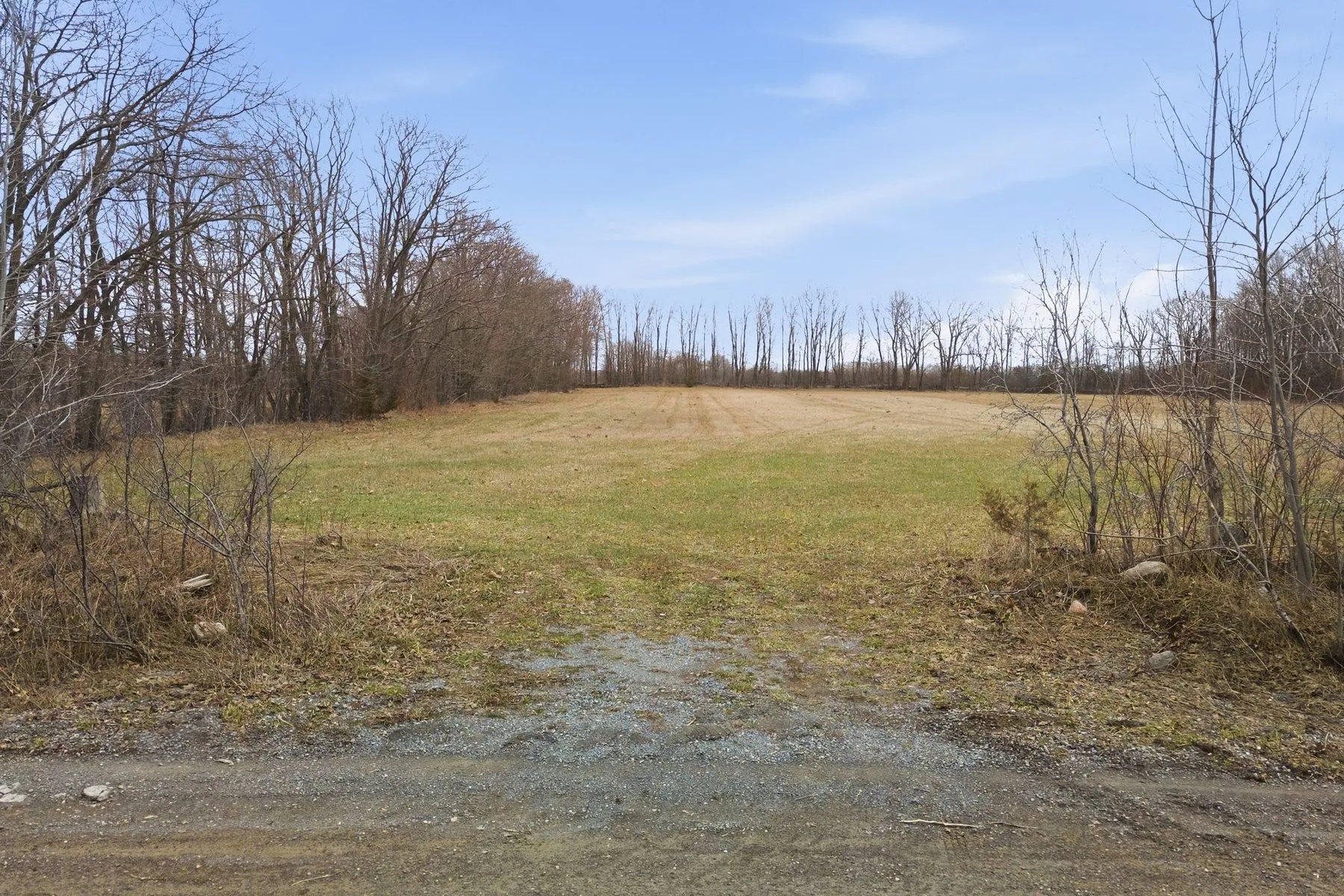
Most people who move to Prince Edward County move into something that already exists. The buyers who find this page are thinking about something different, building something that doesn't exist yet. A custom home on a piece of land they chose for a reason. A hobby farm with room to breathe. A self-sufficient property built on their terms, with the materials and design they actually want.
Rural land in PEC is still available, and it is still within reach. But buying it requires a different kind of due diligence than buying a house. Zoning, entrance permits, well feasibility, septic design, Conservation Authority setbacks, these are the questions that separate a smart land purchase from an expensive lesson. This guide covers all of it.
Three Kinds of Rural Land Buyers: Which One Are You?
Rural land in PEC draws a distinctive mix of buyers. Most fit one of three profiles, each with different priorities, different questions, and different things to watch for.
The Custom Home Builder
You want to build your own home, the floor plan, the materials, the orientation on the lot. You may have been watching the resale market and decided nothing available matches what you actually want. Buying land and building gives you control over every decision. The tradeoff is time, complexity, and the upfront due diligence required to confirm you can actually build what you envision on the land you're considering.
The Eco & Sustainable Builder
You're drawn to alternative construction, passive house, straw bale, ICF, timber frame, or off-grid systems. PEC's rural lots and relaxed density make it one of the more accessible places in eastern Ontario to permit and build an unconventional home. The land requirements for alternative construction are often larger and more specific, but the County's building department works with alternative methods on a case-by-case basis.
The Hobby Farm Buyer
You want acreage, enough to keep animals, grow food, plant an orchard, or simply have room that doesn't end at a fence line. The ideal hobby farm in PEC has a mix of cleared and treed land, road frontage, a good well, and zoning that permits the livestock or farm use you have in mind. Agricultural designation also brings significant property tax advantages that pure residential lots don't get.
The land doesn't come with the life you want built in. You bring that. What the land brings is the possibility, and the constraints worth knowing before you commit.
The Market
What Rural Land Costs in Prince Edward County
Vacant land pricing in PEC varies significantly by size, zoning, services availability, road frontage, and location within the County. The ranges below reflect current market conditions and are approximate, specific lots vary widely based on these factors.
| Land Type | Typical Range | What to Expect |
|---|---|---|
| Rural residential lot (1,2 acres) | $100K,$300K | Road frontage. Sometimes a drilled well and entrance are already in place; often there are none. Must accommodate septic. Most common build-ready land type in PEC. Price varies heavily by location within the County. |
| Rural acreage (5,25 acres) | $200K,$550K | Larger parcels with mix of cleared and treed land. May include outbuildings. Suitable for custom home builds, hobby farm starts, or holding land. Due diligence on entrance and septic is critical. |
| Agricultural land (25,100 acres) | $350K,$1.2M | A1-zoned farmland with existing cleared acreage. May include tile drainage, existing structures, or crop history. Property tax assessment as agricultural significantly reduces annual carrying costs. |
| Large farm parcels (100+ acres) | $700K,$2M+ | Working or semi-retired farms. Often include a mix of house, barn, outbuildings, and varied land types. Pricing reflects land productivity, existing infrastructure, and location. |
| Waterfront vacant land | $275K,$700K+ | Build-ready lots with water access. Significant additional due diligence required: road allowance status, dock permitting, Conservation Authority setbacks. See the waterfront guide for full detail. |
Before You Buy
Five Due Diligence Items That Can Make or Break a Rural Land Purchase
Vacant land purchases in Ontario come without the safety nets that a home purchase provides, no seller's disclosure on what you might find, no existing well to test, no existing septic to inspect. The due diligence happens before you firm up, and these are the five items I cover on every rural land deal.
- Zoning, the first question, always. Prince Edward County's zoning by-law determines what you can build, how many structures, what farm uses are permitted, and what setbacks apply. Agricultural (A1), Rural (RU), and Rural Residential (RR) are the most common designations for vacant land, each with meaningfully different permissions. Some lots are also subject to Environmental Protection overlays that restrict building in certain areas entirely. Confirm the zoning designation and read the applicable provisions before you fall in love with a piece of land.
- Entrance permit feasibility. Before a building permit can be issued on vacant land in PEC, you need an approved entrance from the road to your property. The County (or MTO for provincial highways) evaluates sight lines, traffic speed, and turning radius. On some rural roads, the sight lines simply don't meet requirements at any point along the frontage, meaning the lot legally can't be built on, regardless of its zoning. This is not a hypothetical risk. Always walk the frontage with an entrance permit in mind before committing to a purchase.
- Well feasibility. There is no way to guarantee a well will produce adequate water from the surface. What you can do is look at neighbouring well records (the Ontario Well Record database is publicly accessible), check the geological character of the area, and talk to local well drillers about what depth and yield are typical in that location. Some areas of PEC have excellent bedrock aquifers; others require deep drilling or produce limited yields. A hydrogeological report is available for higher-stakes purchases. Never assume the well will work, confirm what the local track record is.
- Septic design approval, required before your building permit. The County requires an approved septic design as part of the building permit application. A licensed septic designer must assess the soil conditions, lot size, and intended water usage to design a system, and some soils in PEC don't support conventional septic systems without engineered alternatives. The cost of a septic assessment is modest; the cost of discovering after purchase that the lot needs a $60,000 engineered system is not. Get the soil assessment done as a condition of your offer.
- Conservation Authority jurisdiction. The Quinte Conservation Authority has regulatory jurisdiction over development within 30 metres of a wetland, watercourse, or shoreline. If any part of your lot falls within a regulated area, you need a Conservation Authority permit in addition to a building permit before any construction can begin. Some rural lots in PEC have regulated features that significantly reduce the buildable area, or eliminate it in certain configurations. Check the Conservation Authority mapping before you commit.
None of these are reasons to avoid vacant land, they are the reasons to do your homework first. The buyers who complete this list before making an offer are the ones who close with confidence.
From Land Purchase to Building Permit: What the Process Looks Like
Buying land and building in PEC is a multi-step process that typically spans one to three years from purchase to move-in, depending on the complexity of the build and the speed of design and permitting. Here is a realistic overview of the sequence.
Find and Firm Up the Land
Complete due diligence on zoning, entrance, well feasibility, and septic conditions. Use conditions in your offer to protect yourself while you complete these checks. Close with confidence, or walk away with your deposit if the land doesn't pass.
Engage an Architect or Designer
For any home requiring a building permit in Ontario, you need drawings prepared by a licensed designer or architect. This stage is also where alternative construction methods, straw bale, passive house, ICF, are specified and the code compliance path is defined. Budget 3,6 months for design and revisions.
Septic Design and Approval
A licensed septic designer assesses the lot and produces a design for submission to the County. This is a prerequisite for your building permit application. Run this in parallel with architectural design to save time.
Entrance Permit
Apply to Prince Edward County (or MTO if on a provincial road) for your entrance permit. This is reviewed for sight lines and safety standards. Engage early, it is the step most buyers forget and the one that causes the longest unexpected delays.
Building Permit Application
Submit your complete application to the County's Building Department, architectural drawings, septic design, survey, and supporting documents. The County has a statutory obligation to review within a set timeframe, but complex or alternative construction applications may require additional review. Budget 4,12 weeks for approval.
Build: With Inspections Throughout
Construction proceeds with mandatory inspections at key stages: foundation, framing, insulation, and occupancy. For alternative construction (straw bale, passive house), inspection scheduling may require coordination with specialized inspectors or third-party certifiers depending on the method. A realistic construction timeline for a custom build in PEC is 12,24 months from permit issuance.
Why PEC Works Well for Eco-Friendly and Alternative Builds
Prince Edward County has become a quiet destination for buyers interested in building outside the standard wood-frame suburban box. The combination of large rural lots, a building department willing to engage with alternative methods, and a community that skews toward sustainability and intentional living makes PEC a genuinely good fit for non-conventional builds.
- Straw bale construction, permitted in Ontario under the Alternative Solutions pathway of the Building Code. Straw bale walls deliver R-values in the range of R-30 to R-45, exceptional thermal mass, and a dramatically lower embodied carbon footprint than conventional construction. The key is finding an architect with straw bale experience and engaging the building department early to agree on the compliance path. Lots in PEC are typically large enough to accommodate the required setbacks and footprint. I built my own straw bale home on rural land in Carrying Place, and my family and I absolutely love it, the warmth, the quiet, the way it holds temperature through a PEC winter. If you are seriously considering this build type, I can speak to the process from experience, not just from reading about it.
- Passive house and high-performance design, PEC's rural lots lend themselves to south-facing orientations with unobstructed solar access, the fundamental requirement for passive house performance. A well-designed passive house in PEC can reduce heating and cooling costs by 70,90% compared to a code-minimum build, making it an excellent long-term investment on a property where utility infrastructure can be expensive to install and maintain.
- Off-grid solar and battery systems, widely used across rural PEC. Grid connection in rural areas can be costly and time-consuming; a well-designed solar and battery system can be cost-competitive with a long grid connection, depending on the property. PEC's solar irradiance is reasonable for Ontario, not the highest, but sufficient for a well-designed off-grid system sized for the load. Hydro One connection applications for rural PEC can take 18,36 months in some areas; off-grid can be faster and simpler on the right property.
- Hobby farm self-sufficiency, a significant number of PEC's rural land buyers are pursuing genuine agricultural self-sufficiency. Market gardens, small-scale livestock, orchards, beehives, and on-farm food processing are all possible under the right zoning. The County's agricultural community is active and knowledgeable, access to local farming expertise, seed networks, and equipment is genuinely good in PEC relative to other rural Ontario markets.
Common Questions
Frequently Asked Questions: Buying Vacant Land in Prince Edward County
Yes, in most cases, but it depends entirely on the zoning designation of the specific property. Rural Residential (RR) and Agricultural (A1) zoning generally permit a single-family dwelling, subject to the County's zoning by-law and Ontario Building Code requirements. Some properties also have Environmental Protection overlays or Conservation Authority regulated areas that restrict where on the lot you can build. Always verify zoning and any overlay designations before making an offer, and confirm with the County's Planning Department that a building permit can be issued for your intended use.
There is no single minimum, it depends on zoning and whether municipal water and sewer services are available. In rural PEC, where virtually all properties rely on private well and septic, the lot must be large enough to accommodate both a well and a septic system with the required setbacks between them. The Ontario Building Code Part 8 governs septic system design, and the County's zoning by-law sets minimum frontage and area requirements by zone. Most rural lots in PEC that can support a build are at least 0.4 hectares (approximately 1 acre), with most buyers preferring 1,5 acres for practical reasons of privacy and system placement.
Agricultural (A1) zoning is what most hobby farm buyers are looking for. A1 zoning in PEC permits a primary dwelling plus a broad range of farm uses, livestock, market gardening, greenhouses, barns, stables, and related structures. Rural (RU) zoning is more restrictive and may not permit all the agricultural activities you have in mind, especially livestock. If you intend to pursue agricultural property tax assessment through MPAC, the property must also meet their definition of a farming operation, which has specific requirements on farm gross income and activity. Confirm both the zoning permissions and the tax assessment implications before committing.
Yes. Almost all rural and agricultural properties in PEC have no access to municipal water or sewer services. You will need a private well (drilled by a licensed contractor under Ontario's Water Supply Wells regulation) and a septic system designed and installed in accordance with the Ontario Building Code Part 8. A septic design must be approved by Prince Edward County before a building permit can be issued. A drilled well typically costs $8,000,$20,000 depending on depth and conditions. A conventional septic system typically costs $15,000,$35,000; engineered alternatives for difficult soil conditions can cost more. Budget for both before you finalize your build cost estimates.
Yes. PEC is one of the more accessible places in eastern Ontario for alternative and sustainable construction. Straw bale, passive house, ICF, timber frame, and earth-sheltered designs can be permitted under the Ontario Building Code's Alternative Solutions pathway, provided they meet the code's performance objectives. Off-grid solar and battery systems are widely used in rural PEC and are often cost-competitive with long Hydro One grid connections on remote rural lots. Composting toilets require a Certificate of Approval from the Ministry of the Environment. The key is engaging a designer experienced with alternative construction and connecting with the County's building department early to agree on the compliance and inspection path.
An entrance permit is required before you can install a driveway access from a public road onto your property, and it is a prerequisite for a building permit in Prince Edward County. The County (or MTO, for provincial highways) evaluates the proposed entrance location for sight lines, traffic speed, and turning radius. On some rural roads with high speed limits or poor sight lines, it is not possible to locate a compliant entrance anywhere along the lot's frontage, which means the lot cannot legally be built on, regardless of its zoning designation. Always confirm entrance permit feasibility before committing to a vacant land purchase. Walk the frontage and look for sight line restrictions before you fall in love with the property.
Tell Me What You're Looking For
Every land search starts with understanding what you want to do with it. Send me a note, I'll come back with honest guidance on what's available, what to watch for, and whether your vision is realistic for the properties I know of in PEC right now.

Land Listings Move Fast: Stay Ahead
Monthly updates on rural land listings, market conditions, and County real estate, no noise, no filler.
Unsubscribe any time. No spam, ever.