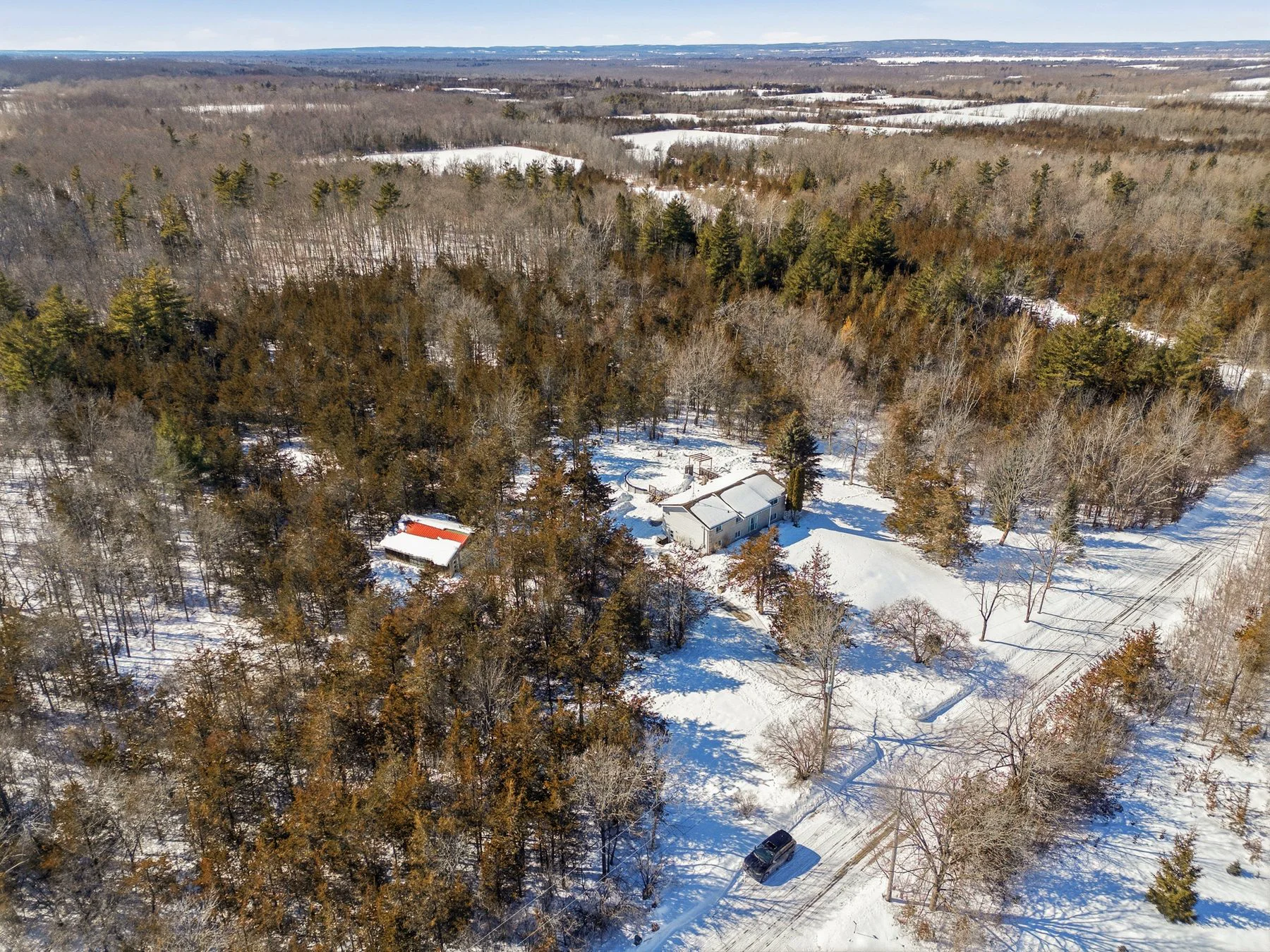
If you are moving to Prince Edward County from a city, there is a good chance you have never owned a home that wasn't connected to municipal water and sewer. You turned a tap, water came out. You flushed, it went away. Somebody else worried about the rest.
In rural PEC, that somebody is you. The large majority of County properties outside the village cores draw their water from a private drilled well and treat their wastewater through a private septic system. These are not exotic or fragile systems, hundreds of thousands of rural Ontario homes run on them quietly for decades. But they are yours to understand, maintain, and inspect before you buy. This is the guide every rural buyer should read before they make an offer.
The Three Things Every Rural Buyer Needs to Understand
Owning a rural home in PEC means taking responsibility for three systems that a city home hands off to the municipality. None of them are complicated once you understand them, and each one is worth a few minutes of due diligence before you commit to a property.
The Well
Your private source of water, almost always a drilled well reaching down into bedrock. What matters is yield (how much water it produces), depth, age, and the well record on file with the province. A good well is invisible and you forget it exists. A marginal one shapes how you live, so it is worth knowing which you are buying before you do.
The Septic System
Your private wastewater treatment, a buried tank plus a leaching bed that filters everything through the soil. Septic systems are durable when maintained and expensive when neglected. Age, maintenance history, and a proper inspection by a septic contractor tell you almost everything you need to know about what you are inheriting.
The Water Quality
Having water is not the same as having good water. PEC's geology means many wells carry hardness, iron, sulphur, or occasional bacteria. The fixes are routine and affordable, but you want to know what is in the water before you buy, not after your first shower. Testing is simple, and the bacteria test is free.
A rural home doesn't hide its systems from you. It just asks that you understand them. The buyers who do that before they offer are the ones who never lose sleep over it after.
System One
The Well: Where Your Water Comes From
Most rural PEC homes are served by a drilled well, a narrow shaft bored down through the soil and into the bedrock below, cased in steel or PVC to keep surface contamination out. Drilled wells are the gold standard: they reach deep, stable water and are far less vulnerable to drought and contamination than the older dug or bored wells you still occasionally find on long-held County properties.
When you look at a well, four things tell the story:
- Yield, or flow rate. Measured in gallons per minute, this is how much water the well can sustainably produce. Around 5 GPM comfortably serves a typical home, but the right number depends on household size and water habits. A lower-yield well can still work well when paired with a storage cistern that buffers demand.
- Depth and age. Deeper wells generally tap more reliable water. Age matters for the casing, the pump, and the pressure system, a well itself can last generations, but pumps and pressure tanks are wear items that get replaced over time.
- The well record. When a licensed contractor drills a well in Ontario, they file a well record with the province documenting depth, yield, and construction. These records are publicly searchable through the Ontario government's well records database, and they are one of the most useful and overlooked pieces of due diligence on a rural property.
- Real-world history. The single best source of truth is the current owner. Has the well ever run dry in a hot August? Did the 2025 drought affect it? How many people have the household supported without trouble? A flow test gives you a snapshot; the owner's lived experience gives you the pattern.
- Ask for the well record. Depth, yield, and construction date are all on file. If the seller doesn't have it, the province's well records database usually does.
- Build in a water condition. Make your offer conditional on a satisfactory water quality test and, where it matters, a flow or yield test. This is standard, expected, and protects you.
- Read old reports in context. A decades-old dry-well or low-yield report may predate later work, such as deepening, blasting, or a new pump, that changed the well's performance entirely. Don't take an old document at face value without asking what happened since.
- Ask about storage and treatment. A cistern, pressure tank, UV light, or water softener already on the property tells you how the current owners have managed the supply, and what you may want to budget for.
System Two
The Septic System: Where Your Wastewater Goes
A conventional septic system has two parts: a buried tank where solids settle and break down, and a leaching bed (also called a tile or drain field) where the liquid effluent is filtered through the soil. Most residential systems in Ontario are governed by Part 8 of the Ontario Building Code, and a well-built, well-maintained system is one of the most reliable pieces of a rural property.
The catch is that "well-maintained" does a lot of work in that sentence. A neglected septic system is one of the larger surprise costs in rural ownership, so this is where buyer due diligence pays off most directly.
- Age and type. A conventional system typically lasts 20 to 30 years. Find out when it was installed, what type it is, and whether it is a standard gravity bed or an engineered or raised system designed for difficult soils or a high water table.
- Maintenance history. The tank should be pumped out every three to five years. A seller who can show a record of regular pump-outs is telling you the system has been cared for. No record is not a dealbreaker, but it is a reason to inspect closely.
- The leaching bed's life. The bed is the part that wears out and is expensive to replace. It should never have been driven on, paved, or planted with deep-rooted trees. Lush green stripes, soggy ground, or odours over the bed are warning signs worth taking seriously.
- The inspection. A standard home inspection does not meaningfully assess a septic system. Bring in a septic professional, and have them look at the tank at its normal working level, so the baffles, the separation of solids, and the bed can actually be evaluated rather than guessed at.
System Three
Water Quality: Having Water vs. Having Good Water
A well can produce plenty of water that still isn't water you want to drink untreated. Prince Edward County sits on limestone and shale bedrock, which gives much of the County's well water its character: hard, mineral-rich, sometimes carrying iron or a sulphur smell, and occasionally testing positive for bacteria after heavy rain or in older wells. None of this is unusual, and almost all of it is fixable with routine, affordable treatment. The key is knowing what is in the water before you buy.
There are two kinds of water testing, and they work differently:
- Bacteria testing, and it's free. You pick up sample bottles from Hastings Prince Edward Public Health, collect a sample following their instructions, and drop it off for analysis at a Public Health Ontario laboratory at no charge. Public health guidance is to test for bacteria at least three times a year, in spring, summer, and fall, and any time the water changes in look, taste, or smell.
- Chemistry testing, at a private lab. For hardness, iron, sulphur, sodium, nitrates, and other minerals, you use a private lab and pay a modest fee. It is worth doing at least once when you buy a property, so you know exactly what treatment, if any, the water needs.
- Common PEC treatments. A UV light disinfects against bacteria. A water softener handles hardness. Iron and sulphur filters clear up staining and smell. Most rural homes in the County run some combination of these, and the equipment is straightforward to install and maintain.
Water treatment is one of the most common and least alarming line items in rural ownership. A buyer who tests the water and budgets for a UV light or softener is in a far better position than one who discovers a problem after moving in.
What It Costs
Rural System Costs, Worth Knowing Before You Buy
These are approximate ranges for PEC and eastern Ontario. Actual costs vary with depth, soil, system type, and site conditions, but knowing the order of magnitude helps you plan, and helps you negotiate if an inspection turns something up.
| Item | Typical Range | What to Know |
|---|---|---|
| New drilled well | $8,000 to $20,000 | Depends heavily on the depth needed and drilling conditions in that part of the County. Existing wells on resale homes are usually long paid for, this is a build or replacement cost. |
| New septic system | $15,000 to $35,000 | Conventional gravity systems sit at the lower end. Engineered or raised beds for poor soils or high water tables cost more. The single biggest reason to inspect before buying. |
| Septic tank pump-out | $300 to $600 | Routine maintenance every three to five years. Cheap insurance against a far more expensive bed failure down the road. |
| Water treatment system | $1,000 to $10,000 | A UV light and filter for bacteria is around $1,000 installed. Softeners, iron and sulphur removal, or a combination built for difficult water run $1,500 to $10,000. What you pay comes down to what the water chemistry calls for. |
| Well and septic inspection | $250 to $400 + HST | Most local companies inspect both systems on the same visit. A tank pump-out is a separate job and a separate cost, and it comes after the inspection, not before. Full 2026 inspection pricing is further down this page. |
Before You Close
The Three Inspections Every Rural Buyer in Prince Edward County Needs
On a serviced house in Picton or Wellington, one inspection covers the property. On a rural County property it takes three, and the reason is straightforward: two of the systems you are buying are underground, and a home inspector opens neither of them. A standard home inspection confirms that a well and a septic exist. It does not tell you whether they work.
Book all three inside the same condition period so the results land together. You want to be negotiating once, with everything in front of you, not three times as each report trickles in.
1. The Home Inspection
This is the one buyers already know. The inspector walks the structure, roof, foundation, electrical, plumbing, heating, and insulation, then gives you a written report. On a County property, expect two and a half to four hours, longer than a subdivision house, because rural homes here are often older, frequently added onto, and more likely to have a woodstove, a crawlspace, or a sump that needs a proper look.
It is also the least regulated of the three. Ontario does not license home inspectors. The Home Inspection Act was passed in 2017 and has never been proclaimed into force, which means anyone can use the title and membership in a professional body is voluntary. So check credentials yourself: look for an RHI designation through the Ontario Association of Home Inspectors, or certification through CAHPI or InterNACHI, and ask what the inspector carries for errors and omissions insurance.
What it does not cover is the part that matters most out here. Your inspector will check the pressure tank and confirm the taps run. They will not measure well yield, and they will not open the septic tank. Those are separate trades. It is worth saying plainly, because plenty of buyers assume the home inspection covers everything on the property and only find out otherwise after the condition period has closed.
Ask for someone who works in the County regularly. The rural building stock here has its own patterns, stone foundations, the occasional century home with knob and tube still in a wall, additions built before permits were routine. An inspector who sees those weekly reads them faster than one driving out from the city.
2. The Well Inspection and Water Test
Two different things get bundled under this heading, and it helps to keep them apart.
- A well inspection, or flow test, measures production. The company runs the well, records how many gallons per minute it sustains, and checks the pump, pressure system, and casing. The question it answers is whether this well can supply the house you are about to buy. Around 5 GPM is the usual benchmark for a family home.
- A water test measures quality. Bacteria testing is free through Hastings Prince Edward Public Health. Chemistry, meaning hardness, iron, sulphur, sodium, and nitrates, goes to a private lab for a fee.
You want both, and on most County deals your lender settles the question for you. Many lenders require a flow rate and a potability certificate before they will fund a rural purchase, so this doubles as a financing condition rather than sitting there as optional due diligence.
The well record covered earlier on this page tells you the well's history. The flow test tells you its present condition. Read them together, and ask the seller what the well has actually done through a dry August.
3. The Septic Inspection
This is the inspection most likely to save you real money, and the one most often skipped or done badly.
A proper septic inspection means a septic contractor rather than a home inspector. What it does not mean is an empty tank, and this is where buyers are routinely given the wrong advice.
A tank at its normal working level tells the contractor more than a freshly pumped one does. In a system that is functioning, the contents separate into layers: a scum layer floating on top, sludge settled on the bottom, and relatively clear liquid in between, with the baffles holding the solids back so that only that middle layer moves out to the leaching bed. Those layers are the evidence that the system is doing its job. Pump the tank before the inspection and the evidence is gone. What is left is a clean box and no way to judge how the system was actually performing.
So the order matters. Inspect first, at working level. Pump afterward if the tank is due.
The pump-out itself belongs in the offer rather than in the inspection. If the tank has not been serviced in years, or nobody can tell you when it last was, it is reasonable to write a clause requiring the seller to have it pumped before closing. That gets you a documented service, a fresh start on the three to five year cycle, and a look inside an empty tank as a second data point.
The contractor should also walk the leaching bed for the warning signs covered above, soggy ground, lush stripes of grass, odour, and confirm the bed was sized for the number of bedrooms the house currently has. A bed permitted for three bedrooms serving a house where someone later finished a fourth is a real and recurring problem in the County. It tends to surface at the worst possible moment, when your own future buyer's lawyer asks to see the permit.
What Inspections Actually Cost in Prince Edward County (2026)
No local inspector or well and septic company publishes a price list. Every one of them quotes the job, which makes it awkward to budget before you have started making calls. Here is what the three inspections actually run in the County as of August 2026.
| Inspection | Typical Cost | What to Know |
|---|---|---|
| Home inspection | $450 to $600 | Two and a half to four hours on a typical rural property. Larger, older, or outbuilding-heavy properties sit at the top of the range. |
| Well and septic inspection | $250 to $400 + HST | Usually one company, one visit, both systems. The tank should be at its normal working level when they arrive, not freshly pumped. |
| Septic tank pump-out | $300 to $600 | Not part of the inspection and not a prerequisite for it. Where the tank is overdue, this is usually written into the offer as a seller obligation before closing. |
| Water bacteria test | Free | Sample bottles from Hastings Prince Edward Public Health, analysed at no charge by a Public Health Ontario laboratory. |
| Water chemistry test | Varies by panel | Private lab, modest fee. A basic mineral panel is inexpensive, and the cost rises with the number of parameters you test for. |
All in, budget roughly $700 to $1,000 plus HST for the three inspections themselves. A pump-out, if the tank turns out to be due for one, is a separate $300 to $600 and is often negotiated onto the seller. Set that against a $15,000 to $35,000 septic replacement or an $8,000 to $20,000 well, and the inspections are the cheapest money you will spend on the purchase.
- A short list of companies serves the whole County. There are only so many home inspectors and well and septic outfits working this area, and in a busy spring or fall they are booked out.
- A one-week condition period is often too short. Three trades have to attend, and the bacteriological lab result alone takes a couple of days to come back. Statutory holidays quietly eat working days.
- Ask for availability first, then write the date. Check what your inspectors can actually do before you commit to a condition deadline in the offer, not after. This is a call I make for my buyers before we submit.
Your Due Diligence Checklist: From Offer to Close
Here is the sequence I walk buyers through on a well-and-septic property. Done in order, it turns the scariest part of rural buying into a straightforward set of boxes to tick.
Ask the Right Questions Before You Offer
Request the well record, the septic age and pump-out history, and any existing water test results. Ask the seller directly about dry-summer performance and any treatment equipment on site. Much of this can be gathered before you ever write an offer.
Write Conditions Into the Offer
Make the purchase conditional on a satisfactory water quality test, a well flow or yield test where it matters, and a septic inspection. These are standard, expected conditions on rural deals, and they protect your deposit while you verify.
Test the Water
Run the free bacteriological test through Hastings Prince Edward Public Health, and a private-lab chemistry test for minerals. Together they tell you whether the water is good as-is or needs routine treatment you can budget for.
Book the Inspections
A home inspector, a well flow test, and a septic contractor, arranged early enough that all three fit inside your condition period. Leave the septic tank at its working level for the visit, and negotiate a pump-out before closing if it is overdue. The three inspections section above covers what each one does, what it misses, and what it costs.
Use What You Learn
Clean results let you close with confidence. If something turns up, a marginal well, an aging bed, water that needs treatment, you have real leverage to renegotiate price or ask the seller to address it. Either way, you go in with your eyes open.
Free One-Page PDF
Take the Checklist With You
Every question and offer condition on this page, distilled onto a single page you can print and bring to a showing. Tell me where to send it and it's yours.
Common Questions
Frequently Asked Questions: Wells, Septic, and Water in PEC
It depends on location. The towns and villages, Picton, Wellington, Bloomfield, Consecon, and parts of Rossmore and Carrying Place, have municipal water and in some cases municipal sewer. But the large majority of Prince Edward County is rural, and rural properties rely on a private drilled well for water and a private septic system for wastewater. If you are buying anything outside the serviced village cores, you should assume you are buying a property on private well and septic, and do your due diligence accordingly.
The measure is the well's flow rate, or yield, expressed in gallons per minute (GPM). A sustained yield of about 5 GPM is a common benchmark for comfortably supplying a typical family home, and many lenders will ask for a flow rate and potability test before financing a rural purchase. That said, yield is not the whole story. A lower-yield well paired with a large storage cistern can serve a household well, and a high-yield well can still produce hard or mineral-heavy water that needs treatment. Always ask for the well record, ask the seller about real-world performance through dry summers, and consider a flow test as a condition of your offer.
Public health guidance in Ontario is to test private well water for bacteria at least three times a year, typically in spring, summer, and fall, and any time you notice a change in colour, taste, or smell. Bacteriological testing is free: you pick up sample bottles from Hastings Prince Edward Public Health, collect the sample following the instructions, and drop it off for analysis at a Public Health Ontario laboratory. Bacteria is the free test. For minerals, nitrates, hardness, sodium, iron, sulphur, and other chemistry, you use a private lab at your own cost, and it is worth doing at least once when you buy.
A well-maintained conventional septic system in Ontario typically lasts 20 to 30 years, sometimes longer. Lifespan depends heavily on maintenance: the tank should be pumped out every three to five years, and the leaching bed should never be driven on, paved over, or planted with deep-rooted trees. Warning signs of a failing system include slow drains, sewage odours near the tank or bed, unusually lush or wet grass over the leaching bed, and backups inside the home. Because a replacement system is one of the larger rural ownership costs, a septic inspection before purchase is strongly recommended. Have the contractor assess the tank at its normal working level, where the separation of scum, liquid, and sludge shows whether the system is functioning, rather than pumping it out first and losing that evidence.
A new drilled well typically costs $8,000 to $20,000 depending on the depth required and the drilling conditions in that part of the County. A new conventional septic system typically costs $15,000 to $35,000, and engineered or raised-bed systems for difficult soils or high water tables can cost more. Water treatment equipment depends entirely on what the water needs. A UV light and filter, the usual answer to bacteria, runs about $1,000 installed. More involved treatment for hard, iron-heavy, or sulphur water ranges from $1,500 to $10,000. These are the numbers worth knowing before you buy, because they are far cheaper to plan for than to discover after closing.
Yes, on both. These are the two systems with the highest replacement cost and the least visibility, and neither is covered by a standard home inspection in any meaningful depth. Build conditions into your offer for a water quality test (bacteria and chemistry), a well flow or yield test, and a septic inspection carried out with the tank at its normal working level. The cost of these inspections is modest relative to the cost of replacing a failed system, and they give you real negotiating leverage if something turns up. A clean set of results also gives you peace of mind on the single most common source of rural-buyer anxiety.
A home inspection on a typical Prince Edward County property runs about $450 to $600 as of 2026, and usually takes two and a half to four hours. Rural homes take longer than subdivision houses because they tend to be older, often added onto, and more likely to include outbuildings, a woodstove, or a crawlspace. Larger or more complex properties sit at the top of the range. Keep in mind that the home inspection is only one of the three inspections a rural buyer needs. It does not measure well yield and it does not include opening the septic tank. Those are separate trades, at roughly $250 to $400 plus HST for both systems, plus $300 to $600 for a tank pump-out where one is billed separately.
In practice, yes. A well inspection, or flow test, measures how many gallons per minute the well sustains and checks the pump, pressure system, and casing. Around 5 GPM is the common benchmark for a family home. Beyond your own peace of mind, many lenders require a flow rate and a potability certificate before they will finance a rural purchase, so on most County deals the well inspection functions as a financing condition rather than an optional one. Pair it with water testing: bacteria testing is free through Hastings Prince Edward Public Health, and chemistry testing for hardness, iron, sulphur, sodium, and nitrates goes to a private lab for a modest fee.
Usually the seller, when it is written into the agreement that way, and that is the more common arrangement in Prince Edward County. A pump-out before closing is maintenance on a system the seller has been responsible for, so where the tank is overdue, or where nobody can say when it was last serviced, a clause requiring the seller to pump it before closing is a reasonable ask. Expect $300 to $600. One important point on timing: the pump-out is not what makes the inspection work. A septic contractor learns more from a tank at its normal working level, where the scum, liquid, and sludge layers show whether the system is separating solids properly. Inspect first, pump after. If you pump before the inspection, you have thrown away the evidence you were paying to have looked at.
Looking at a Rural Property? Let's Talk It Through.
Whether you've found a place on well and septic and want a second set of eyes, or you're just trying to understand what rural ownership really involves, send me a note. I'll give you clear, specific guidance. Not a sales pitch.

County Real Estate, Without the Noise
Monthly updates on PEC listings, market conditions, and rural ownership, practical, honest, and never spammy.
Unsubscribe any time. No spam, ever.